Showing posts with label Jago & Litefoot. Show all posts

Sunday, 11 July 2021

Interviews The David Richardson Interview with Tony Fyler


Expanding Fictional Universes into Audio. 

Big Finish Productions has long been a prime player in expanding the universes of Doctor Who, Torchwood, and a whole range of other shows in audio drama. Tony Fyler spoke to the company’s Senior Producer, David Richardson, about what it takes to successfully expand those worlds. 

Where does the spark come from in terms of expanding a TV universe into audio? Are you always looking for places in the story where expansions could happen? Places where expansions could be profitable? Or is it usually a case of “I would really like to hear what happened to…”? 

David: I’d say, without exception, the spark always comes from the original TV episodes. The characters that have been given their own spin-off ranges have earned them because their TV stories suggested a life before the Doctor arrived, and also suggested they have a life after he left. 

That’s true of Jago and Litefoot, and the Counter-Measures team, and also Lady Christina and The Paternoster Gang. I have to say we never, ever start with a conversation that goes ‘What can we do that will make lots of money?’ I can’t recall a single pitch that started that way. It always begins with excitement, the chat about ‘We’ve got this idea and it’s really got us excited’. We’re fans of Doctor Who and Torchwood ourselves, so if it’s an idea that turns our heads, that gets us excited, then that’s usually a good sign. 

In a business where creativity and profitability both have their place, where’s the breakdown for you, and which is the leader – the satisfaction of creativity or the knowledge that an expansion of a universe will sell (while of course making loads of fans happy!)? 

David: Every series must pay for itself - absolutely it must cover its costs, and earn its place in the catalogue. But we are firm believers that creativity brings success - that quality work will find an audience. Over the 14 years that I’ve been working here, whenever we announce a spin-off there’s always someone on social media who sighs and says ‘A spin-off too far’. 

I saw it levelled against Jago and Litefoot all those years ago, and that series has become one of our most enduring hits! I’m not convinced there is such a thing as a spin-off too far in this modern age of multiple series linked storytelling. Story, characters, dialogue rule - that’s what matters. 

What’s your favourite expansion of a universe Big Finish has done so far? What makes them your favourite? 

David: As Nicholas Courtney used to say, ‘The one I’m working with at the time.’ I always thought he was being diplomatic but actually, I can see that, as you gravitate from one series or group of actors to another, at that moment they become your favourite. But I do have a very powerful affection for Jago and Litefoot, because the pairing of Trevor Baxter and Christopher Benjamin was just beautiful. Every day working with them was a day well spent - we just laughed, all the time. We got the work done, and the recordings were brilliant, but every moment between every take was just filled with banter and kind spirits and joy. I sit here talking about it with a smile on my face and tears welling in my eyes - I was just so lucky to be a part of it. 


Without necessarily giving away spoilers (though you should naturally feel entirely free if you like…), is there a universe you haven’t got to expand yet, but really hope to in the future? Do you have a list, and if so, what’s on it that you can safely tell us about? 

David: There are always ideas, things I’ve got on my list of things I’d love to do - and I know a lot of the other producers feel the same. Scott Handcock has pitched some smashing, exciting things which I hope one day might happen - they’re a series I would love to just sit and listen to myself. So I can’t give more details, but there are always ideas floating around. 

What’s the process like between having an idea for a new universe expansion and getting it into studio? Do you commission writers to write scripts on spec if you either need to acquire the rights or persuade key actors? Or is the legal side all nailed in place before the writers start writing? 

David: The process pretty much follows this pattern:
1: You have the idea, which the producer discusses with the script editor, and it’s written into a pitch.
2: That pitch is presented to Jason Haigh-Ellery and Nick Briggs. If they like it, then it’s green lit and a budget is agreed.
3: The producer and the script editor then discuss writers, who are given a brief (which can sometimes be quite prescriptive) and asked to pitch story ideas.
4: Story ideas, once agreed with the producer and script editor, then go to Nick Briggs for his comments and can be reworked from there. They then go to the BBC for approval. Once everything is signed off, we start working on scripts.
 

Thinking in particular of things like the Ninth Doctor Adventures – Christopher Eccleston’s always been an actor motivated by great scriptwriting (and has mentioned Nick Briggs’ writing as a big draw), so were there scripts in place before he signed on to the project, or did you need to convince him on board and then knock his socks off with scripts?

David: Conversations with Chris were ongoing for some time, and we did reach a stage where he asked to see a script. Nick wrote some example pages, which if I recall rightly were the first 40 pages or so of Ravagers, episode one. 


Chris loved it, and we were away.

Hand on heart, I have absolutely loved working with Chris. I’m just so blown away by his energy and passion for what he does - and the kindness with which he treats those around him. Those 12 recording days were some of the happiest, and he threw himself into every script and was always, always full of praise for the efforts of our writing team. 

Similarly, when getting the daughters of famous companion actresses on board (Sadie Miller, Daisy Ashford, etc), do you get scripts written to persuade them in, or does Big Finish’s reputation do a lot of that work for you?


David: We didn’t present scripts to Sadie and Daisy - but they have worked with us before in other roles, so knew Big Finish and the people well. It was a difficult decision to recast those roles, made easy when Sadie and Daisy came on board. 


You have quite a pool of familiar writers you know can deliver at Big Finish, but you’re also frequently bringing in new talents. At what point do names get attached to stories? Is it a case of “I’d really like to hear a River Song story written by [to pick a name at random] Lizbeth Myles, or a Lady Christina story by Sarah Grochala,” or do you get as far as outlines and briefs before thinking of who could do interesting things with them?

David: It’s usually down to availability. People get busy. I mean, I want to work with Lisa McMullin on EVERYTHING, but her TV career is really taking off, and there are only so many scripts she can take on. The same goes across the board. Obviously, some writers are a better fit for some series - writers with great comedy talents are a natural for Missy; writers with strong dramatic flair fit well into Stranded. But there’s huge crossover as well. Someone like Roy Gill can really do anything you throw at him. We’re lucky to have them all. 

Is there ever a set-in-stone idea of what you want to achieve from a universe expansion, beyond the telling of good stories, or is that the be-all and the end-all – to tell good stories with the particular characters you’re expanding? After all, Big Finish is credited with ‘rehabilitating’ the Sixth Doctor after his on-screen mellowing wasn’t given the time to mature. Is that sort of thing part of the goal for some ranges – to broaden people’s perception of characters over time – or is it more a case of plotting out the arc of three or four boxsets in a range at a time and seeing the journey on which they take you before deciding what’s next for the characters? 

David: I don’t think that our agenda is that set-in-stone. We work ahead a bit - for example, I was pitching the story world for Stranded when we were about halfway through the previous Eighth Doctor series, Ravenous. We needed to know where we were going. But it’s always down to telling good stories, and being in an interesting storytelling world. 


And you never know if people are going to buy into it. The basic idea with Stranded was to start with Doctor Who with much of what makes the series Doctor Who taken out. It was my idea, and then I spent months in turmoil because I was terrified people might not buy into that. And yet it became a huge hit, because it was something different. And we got an Audie Award for it - a massively prestigious award. But it had great scripts and such an amazing cast - how could it fail? 

What excites you most about starting a new universe expansion?

David: Those first few weeks, when you are all throwing ideas around and all the creative voices in the team add into the mix, and it snowballs into something wonderful… that’s just so brilliant. I’m a great believer in team working. Everyone should have a voice.

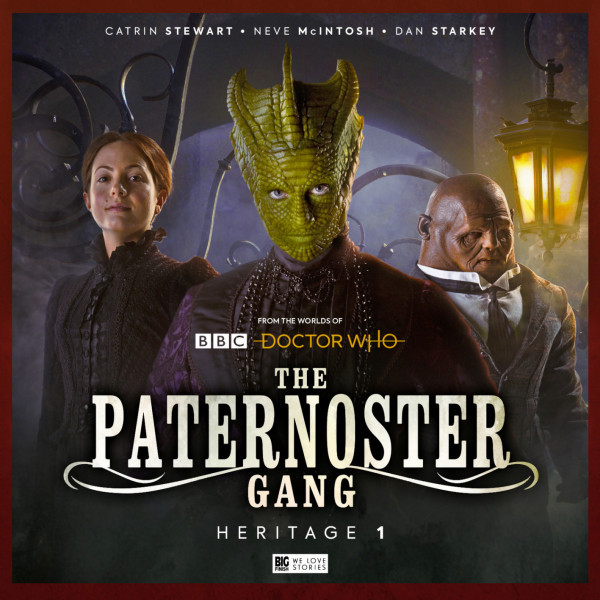
For example, on The Paternoster Gang, I know the three leads are really invested in it and have their own ideas, so every series starts with a meeting where Neve, Catrin and Dan throw ideas out there. And lots of them get used - it’s a really rewarding process.

Forgive me this one – my writing pals at Project Torchwood wanted me to ask “How do you get such great writers all the time?” and also “Is there ever any chance of fan writers working for Big Finish?” – which I think means besides the Paul Spragg competition, is there a potential pathway for ‘fan’ writers to becoming Big Finish writers? 

And also, I guess, how does it work in terms of writers for particular universes? Are there writers that you instantly know you can go to for, say, a Third Doctor story that will take that range forward, or writers who can always be relied on to turn out a cracking Torchwood? Any strict rhyme or reason, or, as you have a good range of writers at your disposal, does it come down to an instinct of who will do well within a particular universe, or with a particular story brief?

David: It’s a good question. We have an ongoing dilemma in that we always need new writers because we’re so busy, but because we’re so busy we have limited time to develop new writers. And ‘develop’ is the key word here - all scripts can go through many rewrites and changes and tweaks, which is a time-consuming process and the writers work closely with our brilliant script editors. 

So someone relatively new to the audio writing can take a lot of the script editor’s time. So we have to limit the intake of fresh writing talent - and we seek that out ourselves. We just don’t have the infrastructure in place to have a formal free submissions system.

The best tip for anyone who wants to write Doctor Who is to keep writing and writing and writing. 


And I think the best Doctor Who writers don’t just want to write Doctor Who - they want to write all sorts of things, but Doctor Who is an important part of that. Get as much experience and set your sights as wide as you can. It’s a big audio industry out there, and there’s a lot to learn. 

Are there any universe expansions that are now officially never coming back? Any more Jenny on the way?* Second set of New Earth stories? Dan Dare? Similarly, any one-offs possibly in mind for future series? Shilling and Sixpence or the like? Im guessing any plans for future Lives of Captain Jack releases are pretty much in abeyance right now? 

(*We asked, just before a second set of Jenny adventures was announced(!)) 

David: I mean, Jago and Litefoot is now sadly over, because we lost dear Trevor Baxter. We reached a very good ending with Counter-Measures, and my feeling at the minute is Id hate to undermine that ending by making more. But never say never. 

With Big Finish being the biggest player in the expanded universe of quite a few fandoms now, and with so many projects and universes on the go at different stages at any given time, is it ever tough to keep up with where each universe is in its story when you’re building the next instalment for it?

David: Not really - I just ask Matt Fitton! The man is a Big Finish encyclopaedia! 

What are the biggest challenges you face when expanding a universe? How you decide on a tone that takes a universe forward, while still being recognisably similar to what the fans have loved about a universe before?

David: I’m not sure that retaining the tone is a challenge, really - that’s part of the joy of it. Finding the authenticity in any range is in our DNA - it’s what drives us. I’d say the biggest challenge for me is always confronting my own nerves - just making sure that everyone has a good time, because that then infuses the production. 

If I’m working with Alex Kingston for the first time, say, I want her to have such a great time that she will come back for more. When Christopher Eccleston steps through the door, I want him to feel ‘Hey, this is a lot of fun.’ Those are the things I worry about - the people. 

This one’s not a question, just an opportunity taken to say thank you, for all the universes that have improved fans lives – my life – immeasurably. I first came into Big Finish fandom by ‘taking a chance’ on Spare Parts (nothing like coming in on a high!). It’s been brilliant so far, and I’ve no doubt it will continue expanding universes – and minds – for decades to come. Thanks, David – and thanks to all who make it happen.

David: Ah, that’s lovely - thanks so much. Seriously, we’re so lucky to do what we do. And I’m so grateful to Nick Briggs who plucked me out of an unhappy job 14 years ago and offered me this role at Big Finish. We really make a lot of this stuff for ourselves and hope that other people like it - so the fact you do means a lot!

Friday, 6 July 2018

Big Finish Reviews+ Jago and Litefoot Forever by Tony J Fyler


We’re gonna need a bigger handkerchief, says Tony.

Everything dies.

That’s been one of the more stark lessons of New Who. Everything has its time, and everything ends.

In terms of Jago and Litefoot, it’s fair to answer that assertion with another familiar line:
We don’t want to go.

Jago and Litefoot has been perhaps the most unlikely runaway success Big Finish has ever had. Based around two characters that appeared together in one Tom Baker story on screen, forty years ago, it should have been an act of faintly desperate one-off curiosity to bring Professor George Litefoot and theatrical impresario extraordinaire, Henry Gordon Jago back together in the audio universe.

But should-have-beens reckon without the personalities of two of Britain’s most vivid character actors, Trevor ‘Litefoot’ Baxter and Christopher ‘Jago’ Benjamin.

What started as a simple Companion Chronicle, The Mahogany Murderers by Andy Lane, expanded to thirteen box sets of adventures, amounting to an episode a week for a full calendar year, as well as return engagements in stories alongside Tom Baker, the Doctor who first brought them together, with Sixth Doctor Colin Baker for two side adventures, and a special one-off that ushered New Who into Big Finish, Jago & Litefoot and Strax. They’d fought vampires, Scorchies, alternative timelines and the Master, and had adventures with Oscar Wilde, Arthur Conan Doyle and Bram Stoker. They’d even spent one box set in the Swinging Sixties.

Throughout it all, Benjamin and Baxter together were indomitable, both in character and as themselves. When we last heard them at the end of the thirteenth series of Jago & Litefoot, they were either in an alternative dimension of airships and steampunk, or their own London was being invaded by aliens that used that technology. It all promised another rip-roaring adventure for the infernal investigators.

They subsequently recorded two extra special Short Trips, which came together to form The Jago & Litefoot Revival by Jonathan Barnes, again blending Classic Who with New Who in the surprises within each half of the story.

If you didn’t pick up the Short Trips at the time, they’re here for you in Jago & Litefoot Forever. Baxter’s half of the story, Act 1, is particularly poignant, as he once again runs into the Doctor – but a Doctor who’s dying, and who’s popped round just to see his old friend Professor Litefoot one last time, separate from Jago and away from their familiar London setting. Their adventure, bathed in Grecian sunlight but fraught with danger of the oddest and most esoteric kind, is a testament to the perennial strength of Litefoot’s character. Act 2, with the action led by Jago, tells a tale of the same time of separation, and a London visit by an entirely different Doctor, a chase through the city’s stews by a galumphing monster of the more straightforward variety, and a conclusion that lets both Jago and Litefoot show their true mettle while saving if not the world, then certainly one another, as they’d done time and time again across the thirteen box sets of their adventures. The Jago & Litefoot Revival is sentimental in the best sense, Barnes, Baxter and Benjamin working like pistons in a finely tuned storytelling engine, meaning even though for the most part the investigators are separated, there are strands that connect their adventures, pulled together in a conclusion that gives them both their signature moment.

Probably though, it’s the title story of this release, Jago & Litefoot Forever, by Paul Morris, that will draw most listeners, since the sad death of Trevor Baxter before the fourteenth set of Jago & Litefoot adventures was recorded.

The cliff-hanger of Series 13 hinted at new plotting complications in their next box set. Naturally, Series 14 seems unlikely now ever to be made, which means Jago & Litefoot Forever has to swiftly dispense with the airship threat. What follows though is a masterpiece of research and trawling through archives – Trevor Baxter of course provided no new voice-work for this single story. Morris has created a story that is Jago-led, with ample support from regulars Ellie Higson (Lisa Bowerman) and Inspector Quick (Conrad Asquith), and occasional but important friends of the pair, including Dr Luke Betterman (David Warner), and which uses archive recordings of Baxter’s Litefoot lines spliced with incredible skill into the drama, meaning Litefoot feels like a genuine living presence in the story, for all he’s frequently missed and importantly absent for chunks of the action. It’s a story which shows a world of Jago’s apparently diminishing function and memory, occasionally prompted by reminders of some of the best adventures of Jago and Litefoot. As the story unfolds, we fear it’s Jago in isolation who will fade and become a shadow of his former self, and then vanish altogether into invisible obscurity. Indeed, it comes close to the wire, threatening to engulf fans of the pre-eminent Victorians in despondency as Jago, looking for Litefoot and the memories of his glory days, seems bound to lose, to finally fail alone where he would surely have succeeded with Litefoot by his side.

It would be criminal to spoil the ending of this story for you, but suffice it to say, despondency is in no sense the keynote on which the series comes to an end.

The ending of the Jago and Litefoot adventures stands right up there alongside the ending of the Sarah-Jane Adventures and the scene where the Eleventh Doctor learns of the death of the Brigadier – it is touching, sniffle-worthy, heart-warming and wonderful, with just a touch of humour to leaven the loss of Trevor Baxter.  

If you’re any kind of fan of Jago & Litefoot, you have to get their final adventures together. Jago & Litefoot Forever is a testament to a brand that would never have been were it not for the original skills of Robert Holmes and the sheer personalities of its two lead actors. It’s a tribute not only to Baxter, but to everyone who wrote on or worked on the Jago & Litefoot adventures over the course of their run. And ultimately, it leaves you smiling, and free to dream up your own continuing adventures for the pre-eminent Victorians. Get this release and raise a glass in celebration: to Jago & Litefoot – Forever!

Tuesday, 2 May 2017

Big Finish Reviews+ The Jago & Litefoot Revival Act One by Tony J Fyler


There’s something inherently joyful, and a little something inherently advertorial, about the Short Trip double-bill 7.03 and 7.04 from Big Finish – together, these two releases form a long short trip, an hour-long adventure with the company’s breakaway stars, Professor George Litefoot and Henry Gordon Jago. There’s no disguising the fact that they also star the Tenth Doctor, as conspicuously not played here by David Tennant, despite He of the Spikiest Quiff in The Cosmos having made his Doctorial debut in the sound booths last year. Quite apart from an opportunity for Victorian London’s finest to add to their Doctor-count though, The Jago & Litefoot Revival is a chance for Big Finish to show off at least something of how it intends to take the new series Doctors forward on audio, with or without the Doctor-actors’ direct participation.   

There’s an initial five minutes of what might, in the theatre, be charitably described as ‘business’ as Litefoot prepares to address one of Victorian London’s eminent societies for clever and curious gentlemen – and there are some lovely Easter egg references there – only to be interrupted by Jago blustering in. That leads to a handful of minutes that feels longer than it is, spent in simply legitimizing and explaining what Jago is doing there at all. That could really have been dealt with in a line or two, and arguably the audio would have been leaner for it, but fortunately, it’s all taken care of pre-credits, so once the Tenth Doctor’s theme music punches in, we’re off to the races with an adventure that sees Jago and Lightfoot in different countries, facing different villains, but more or less feeling the same sentiment – Jago & Litefoot is a tight unit, a magnet for the weird, the mysterious and the otherworldly, and after all these years of battling the bizarre together, they’ve become if not addicted, then certainly invigorated by their adventures, so that life without some eldritch attack or supernatural shenanigan begins to feel rather dull, the two investigators beginning to feel their actual age.

As a way to combat such torpor, Litefoot takes up an offer from his old oppo, Jean Bazemore, to come and take look at her archaeological dig on the island of Minos (We bet she says that to all the boys. Or girls. Or non-binary folk. So…erm…everyone, really), while Jago tries to get on at home, attempting to re-inject the spirit of the golden age of music hall back into London’s veins. Christopher Benjamin and Trevor Baxter begin to each advance their own storyline, and the contrast between them is well drawn by writer Jonathan Barnes, and given their own individual colour by director Lisa Bowerman. Benjamin’s Jago has to deal with some bizarre and serious arachnid infestation issues at the New Regency theatre, calling in an exterminator to put down the web-spinning blighters that are colonising his basement (don’t in any way take that as a euphemism). As such, the tone is an insidious cold and foggy London, Jago seeming to feel almost exhausted by the whole business – the acts lining up for a shot at the limelight are fundamentally useless, his life lacks adventure, his friend has scooted off on the holiday of a lifetime if you like mouldy old bits of rock, and to cap it all, he’s got spiders in the basement, which is enough to give any chap a case of the oopazooticks. Meanwhile Litefoot, following a thoroughly boring sea crossing, and a reunion with Joan, finds himself still filled with ennui, thinking about writing his memoirs and feeling like an old man, but the tone of the audio is warmer, more indolent and tinged with hot-boned torpor.

It’s Litefoot though who first advances boredom into adventure, finding an alien artefact and making almost reluctant use of it, while seemingly stalked by a mad-haired gentleman in a brown suit. There’s a clever division of storytelling labour at work here, as Litefoot’s threat is rather esoteric and otherworldly, a high-concept bit of weirdness with a highly arresting aesthetic that would be absolutely in keeping with modern Who. The raison d’etre of the villains is a little hokey, a little Tenth Doctor technogibber, and seems to suggest that at some point in life, everyone will have been visited by the implacable, impossible and creepy creatures that now threaten the Professor, but in terms of Something To Run Away From, they work very well in this setting, and when Litefoot finally meets up with the Man In The Long Brown Coat, you’ll be a hard-hearted Who-fan indeed if you don’t have a bit of a sniffle.

Meanwhile, as Litefoot’s storyline has taken up most of the Doctor-narrative in this episode, we come back to chilly old London town for the ending, with Jago, a thoroughly inept juggler and an exterminator who’s really not sure what he’s got himself in to. There’s a good deal of fun in the Jago section as we head to the end of the first ‘act’ of The Jago & Litefoot Revival, including things it would be cruel to spoiler for you, but there’s great balance too, as HGJ discovers himself stuck in a basement, facing a creature that embodies the other end of his investigative partnership with Litefoot – far less esoteric, far more giant and scuttly and body-horror based. When the two first met up, that balance was baked right into the DNA of The Talons of Weng Chiang – there was a foe from the future, boiling girls down to an energy drink, which was pretty esoteric, and then there was a giant, scuttling rat quite ready to rip your head off. This time out, Litefoot gets the energy-concerns, and Jago gets the giant scuttly beggar. As we say, there’s a clever balancing act here, the tone of Litefoot’s storyline being in the warm and dealing with dangers more of the mind and an otherworldly nature, while Jago, friend and fleecer of the paying public, finds himself faced with something ugly and primal and physical and terrifying, stuck in a chilly basement with a really bad juggler. As an example of what would happen if you picked the dynamics of the Jago & Litefoot series apart, it works hugely well. As an advert for non-Doctoral Doctor Who stories, it’s a case that hardly needs making – most of the Companion Chronicle range did the same thing for Classic Who fans, telling stories that were Doctor-adjacent or indeed had him in a starring role, but voiced by actors other than those who played the role on TV. The Jago & Litefoot Revival, Act 1, reintroduces the idea but aims it at the New Who generation. Jago and Litefoot, which is to say Benjamin and Baxter, aided and abetted as ever by Bowerman behind the scenes, are pretty much cast iron certainties in terms of bringing in the punters these days, but if you were concerned that the New Who Doctors wouldn’t work in the audio format without their particular actors to voice them, the Litefoot storyline, taking up most of the run time here as it does, should be more than enough to convince you that your fears were groundless. Settle in, Geekbrothers and Nerdsisters – the second act will be beginning shortly…

Big Finish Reviews+ Jago & Litefoot Revival Act Two by Tony J Fyler


Ooh!

At the end of Act 1 of Big Finish’s two-act Short Trip bringing Jago, Litefoot and the Tenth Doctor together – or at the very least, Litefoot and the Tenth Doctor together – we were treated to an extra surprise, as, while George Litefoot was running away from a bunch of spectral cowboys on the Greek Island of Minos in the company of He Who Makes Machines That Go Ding, back in London at the New Regency theatre, Henry Gordon Jago was trapped in a basement with a juggler!

No…wait, hang on, let’s have another go at that. Dooby dooby dooby, New Regency theatre, Henry Gordon Jago was trapped in a basement with a giant scuttly thing from outer space!
Yes, that’s more like it. What Act 2 of The Jago & Litefoot Revival makes clear very quickly is that if there’s one thing you never trap in a basement with a giant scuttly thing from outer space, it’s Henry Gordon Jago.

While Litefoot’s storyline of The Gentlemen of the Dice – a great, esoteric-as-all-hell creation from writer Jonathan Barnes – chasing him all over Minos for reasons not entirely unconnected with his harmonica-playing (everyone’s a critic!) took up most of Act 1 of the two-part story, the majority of this episode is spent in London the company of our favourite loquacious theatre manager, as he fends off a fiend with a friend, racing through the stews and streets of Victorian London pursued by a bug that just begs to be CGId into existence.
Now, here’s where things get complicated. George Litefoot’s on Minos at exactly the same time as Jago’s running through London.

Litefoot’s running with the Doctor.

So’s Jago.

We know of course that the whole ‘My Tardis is a good five minutes’ walk from here’ routine has been used before to explain why the Doctor, any Doctor, can be in a zillion places at what is precisely the same time – or indeed a zillion times at what is exactly the same place. But what Barnes does in Act 2 of the Jago & Litefoot Revival is cleverer than that. More delicious than that. And really, when all is said and done, rather more poignant than that.
And that’s all the clues you’re getting about that.

What we’ll say in addition is that Barnes, more than Benjamin or Baxter (Jago and Litefoot respectively), has a great ear for dialogue, and brings it to play here to allow both our eminent Victorians a unique Doctoral experience at one and the same time. With Jago and his version of the Doctor, there are rather more verbal tics to clue us in to the character’s personality, allowing Jago to recount for us his experience of meeting the Doctor at a very particular point in the Time Lord’s life, when, to be fair, being chased by a giant, scuttling CGI beastie more or less meant it was Thursday. Meanwhile, Litefoot’s Doctor, if anything, is even more pin-point in terms of the when and the how of his being on Minos – he gives us a callback to a TV line that will make every listener smile, to explain exactly when and how he comes to be on the island to lend a hand to his old friend Litefoot with a weapon probably a little more effective than an elephant gun.

Perhaps the most extraordinary thing, despite the surprises in store for Jago and the punch in the hearts that Litefoot’s Act 2 storyline delivers, is the way in which the whole, more or less reasonable thing is resolved. That takes us from having two seemingly separate scenarios into having one scenario that harks back to a number of Seventh Doctor stories – there are elements of Battlefield in the scripting here, and elements of The Greatest Show In The Galaxy. Above all, what comes through is the character of the three leads, the Doctor, Jago and Litefoot, and how each of them is made significantly better, richer and fuller in character by knowing both the others, how, given any opportunity, they’d always go back for each other, stand up for each other, make unmakeable sacrifices for each other because each has proved their valour in the others’ eyes.

It’s all rather moving, really.

Whereas Act 1 was carefully balanced to advance one story to a crisis point and then bring the other forward to an earlier moment of peril, Act 2 is the headlong chase to conclusions of both strands, and especially to their entwined resolution, which is far less straightforward than either of the threats initially seem. But there’s still time for moments of quiet and moments of tenderness – Litefoot with his Doctor on Minos is particularly moving, but Jago’s Doctor is able to express a kind of intelligent regret that will seem familiar from the TV as soon as you hear it.

What we end up with across the course of these two extraordinary Short Trips, is more or less a love letter, to classic Doctoring, modern Doctoring, and to the characters of Henry Gordon Jago and George Litefoot and the actors who give them life too. It’s everything you’d expect and want from a meeting between Jago, Litefoot and the Tenth Doctor – importantly short of David Tennant’s voice – and it’s actually rather more than that too, Big Finish proving it’s better at keeping its air-punchy spoilerific secrets a secret than the BBC is currently able to do.

The Jago & Litefoot Revival might not win any awards. It won’t be the release of the year or anything so grand. But it is a couple of Short Trips that do more than they have to, proving the case for Doctorless Doctor Who for the New Who era just as the Companion Chronicles proved it for Classic Who, while delivering an hour of touching friendships, neat division of the world of Jago & Litefoot, and, as promised, a rejuvenation of both characters as they head into their thirteenth box set of adventures together.


Big Finish Reviews+ Jago & Litefoot 13


The audio adventures of Professor George Litefoot and Henry Gordon Jago, theatrical impresario, the have-a-go heroes of Victorian London who tangle with the uncanny and the bizarre at every turn, have long been a successful series in their own right. Arguably, as they head into their thirteenth box set of four hour-long adventures, they could be thought of as the most successful spin-off Doctor Who has ever had.

But Jago & Litefoot began in the dim and distant television days of the Fourth Doctor, in 1977, and it’s very much in the spirit of an anniversary celebration of those four decades since they first ‘met’ on TV that Series 13 sets out. This set is steeped well and truly in the blood of Weng-Chiang, and there are people reduced to their life-essences left, right and centre here, along with time travellers from the 51st Century, foggy, mysterious London stews and streets, the House of the Dragon, the Eyes of the Dragon, the giant rat in the sewers, the Cabinet of Weng-Chiang and its latticework key. This, while in no sense being the return of Weng-Chiang, is a set of four adventures that ring with the same energy as the Robert Holmes original, while taking us significantly sideways in time, to a world in which the Jago and Litefoot we know never got together to fight supernatural villainy, where they never got caught up in the fight against Magnus Greel and never got to meet the Doctor. Showing us a London in which Jago and Litefoot are not the intrepid infernal investigators we know and love allows us to see how far both they and we have come since their first encounter.
The Stuff of Nightmares, the Paul Morris story that kicks us off on round 13, is a mixture of potentially Freudian psychobabble and sci-fi that almost aims to throw you off and just get on with its own business. There are time-travellers with guns, weird dream inversions, with Litefoot imagining himself dead on his own mortuary slab, with Jago about to cut him open, and Jago dreaming the death of the consummate showman – drying on stage before a packed house. Their neuroses seem to be coming to get them, while all over town, a ruthless killer is looking for people who can lead them to Magnus Greel.

The Stuff of Nightmares belts along at a reasonable pace for most of its running time, but you will need to hang on tight towards the end, even if you know what people are talking about as they start spouting off about chrono-quantum. The ending is somewhat challenging, as Jago and Litefoot get to experience life as it was for time agents on post-Greel 51st Century Earth. A last-ditch escape plan goes interestingly awry, and our heroes find themselves in a London that doesn’t recognise them – at least, not together, and not in any of their familiar haunts.

If The Stuff of Nightmares is the story that gets Jago & Litefoot off to a new set of adventures with a unique range of challenges, Jonathan Barnes’ Chapel of Night is very much the ‘anchoring’ episode of the set. Just the name, ‘Chapel of Night,’ feels like it should come with its own highly portentous musical accompaniment. What Barnes delivers is a second take on Greel’s original experiments, but divorced from his backstory – there are people being fed into machinery for nefarious purposes here alright, but the reason behind the villainy is brand spanking new, and takes advantage of the nature of this box set’s unique twist, a sideways-on look at causality and consequence, and what happens if things happen differently to how you understand them to have happened. There are some impressive vocal performances in this story – listen out for Teresa Banham as Mrs Bartholomew and Jeff Rawle as Toby Brokesmith especially, they light the story up – and you feel like you’ve heard something fresh by the end of it.

The final two stories act as something of a two-parter, and get down to the brass tacks of the premise that arcs through the set – if Jago, Litefoot and the Doctor didn’t stop Magnus Greel when they did, then firstly, who on Earth did, and secondly…are there another Jago and another Litefoot out there in alternative London somewhere, a Jago and Litefoot who never came together as infernal investigators?

How The Other Half Lives, by Matthew Sweet gives us answers to both those questions – if there’s no Jago and Litefoot, unified in their fight against infernal doings and villains, then in a Victorian London as full of infernal doings and villains as this one, someone else must have taken up the mantle so as to ensure there’s still a London left to be in. Someone else must have stopped Greel. And the vampires, and scientists, and murderers and model-makers, and Flickermen and so on and so on – someone else, essentially, must have had the adventures that in ‘our’ world have been had by Jago and Litefoot. Here we get to find out who’s done that.

More shocking though, we learn what the ‘other’ Jago and Litefoot have been upto, having never been brought together to have adventures. Litefoot won’t come as much of a surprise to you, but Jago…

Jago probably will.

Sweet gives us Jago and Jago and Litefoot and Litefoot – two for the price of each – and we’d be lying if we said it didn’t get rather confusing at some points, but there’s a particularly pleasing quest undertaken in this episode, which harks right back to The Talons of Weng-Chiang.

The adventure comes to a climax in Justin Richards’ Too Much Reality, while spurring a final mystery for the double-Jagos and double-Litefoots to solve – killings where the bodies simply fade away. Bringing everything round if not full circle, then satisfyingly close, Richards gives us falling stars, time and dimension-travelling chicanery, and a way to set our heroes on the path to home again, while proving to the other-London’s Jago and Litefoot that the life of infernal investigators is dashed exhilarating, as well as vital work. Our heroes manage to leave the trace of themselves as we know them behind, transforming the lives and pathways of their dimensional doppelgangers, and the set ends on a note that suggests things may be about to get a whole lot more complicated still – promising a fourteenth box set to come.
Jago & Litefoot 13 could be accused of having run out of steam and ideas – the notion of them travelling to a sideways dimension, meeting themselves, and teaming up to fight trans-temporal nastiness is perhaps hardly the most dazzlingly original basic premise, and the heavy mining of their own continuity, both in terms of Weng-Chiang and the previous box sets of their audio adventures, makes Series 13 seem at times really rather like a Greatest Hits collection.

But it isn’t that – it’s miles better than that. It’s a birthday cake, a party, with Jago and Litefoot revisiting some of the key ideas that brought them together, but never doing so in a notably clichéd way. The writers, along with Christopher Benjamin and Trevor Baxter (Jago and Litefoot themselves), whipped along by stalwart Big Finish director Lisa Bowerman, make sure to give Series 13 enough meat of its own to make it, while being a birthday cake, both memorable and unique. Any successful double act is entitled to look back (or indeed sideways) after forty years. Series 13 is Jago & Litefoot doing that, but doing it with verve, flair and a remarkable energy. Series 14 will undoubtedly be different again, especially from the hints dropped at the end of this box set.

There’s yet to be such a thing as a bad Jago & Litefoot box set. This one takes the duo into one of their weirdest environments yet, and they come through it smiling, chuckling even, and heading, arm in arm to the Red Tavern. Where doubtless the world will be ending shortly.