Showing posts with label Big Finish. Show all posts

Sunday, 11 July 2021

Interviews The David Richardson Interview with Tony Fyler


Expanding Fictional Universes into Audio. 

Big Finish Productions has long been a prime player in expanding the universes of Doctor Who, Torchwood, and a whole range of other shows in audio drama. Tony Fyler spoke to the company’s Senior Producer, David Richardson, about what it takes to successfully expand those worlds. 

Where does the spark come from in terms of expanding a TV universe into audio? Are you always looking for places in the story where expansions could happen? Places where expansions could be profitable? Or is it usually a case of “I would really like to hear what happened to…”? 

David: I’d say, without exception, the spark always comes from the original TV episodes. The characters that have been given their own spin-off ranges have earned them because their TV stories suggested a life before the Doctor arrived, and also suggested they have a life after he left. 

That’s true of Jago and Litefoot, and the Counter-Measures team, and also Lady Christina and The Paternoster Gang. I have to say we never, ever start with a conversation that goes ‘What can we do that will make lots of money?’ I can’t recall a single pitch that started that way. It always begins with excitement, the chat about ‘We’ve got this idea and it’s really got us excited’. We’re fans of Doctor Who and Torchwood ourselves, so if it’s an idea that turns our heads, that gets us excited, then that’s usually a good sign. 

In a business where creativity and profitability both have their place, where’s the breakdown for you, and which is the leader – the satisfaction of creativity or the knowledge that an expansion of a universe will sell (while of course making loads of fans happy!)? 

David: Every series must pay for itself - absolutely it must cover its costs, and earn its place in the catalogue. But we are firm believers that creativity brings success - that quality work will find an audience. Over the 14 years that I’ve been working here, whenever we announce a spin-off there’s always someone on social media who sighs and says ‘A spin-off too far’. 

I saw it levelled against Jago and Litefoot all those years ago, and that series has become one of our most enduring hits! I’m not convinced there is such a thing as a spin-off too far in this modern age of multiple series linked storytelling. Story, characters, dialogue rule - that’s what matters. 

What’s your favourite expansion of a universe Big Finish has done so far? What makes them your favourite? 

David: As Nicholas Courtney used to say, ‘The one I’m working with at the time.’ I always thought he was being diplomatic but actually, I can see that, as you gravitate from one series or group of actors to another, at that moment they become your favourite. But I do have a very powerful affection for Jago and Litefoot, because the pairing of Trevor Baxter and Christopher Benjamin was just beautiful. Every day working with them was a day well spent - we just laughed, all the time. We got the work done, and the recordings were brilliant, but every moment between every take was just filled with banter and kind spirits and joy. I sit here talking about it with a smile on my face and tears welling in my eyes - I was just so lucky to be a part of it. 


Without necessarily giving away spoilers (though you should naturally feel entirely free if you like…), is there a universe you haven’t got to expand yet, but really hope to in the future? Do you have a list, and if so, what’s on it that you can safely tell us about? 

David: There are always ideas, things I’ve got on my list of things I’d love to do - and I know a lot of the other producers feel the same. Scott Handcock has pitched some smashing, exciting things which I hope one day might happen - they’re a series I would love to just sit and listen to myself. So I can’t give more details, but there are always ideas floating around. 

What’s the process like between having an idea for a new universe expansion and getting it into studio? Do you commission writers to write scripts on spec if you either need to acquire the rights or persuade key actors? Or is the legal side all nailed in place before the writers start writing? 

David: The process pretty much follows this pattern:
1: You have the idea, which the producer discusses with the script editor, and it’s written into a pitch.
2: That pitch is presented to Jason Haigh-Ellery and Nick Briggs. If they like it, then it’s green lit and a budget is agreed.
3: The producer and the script editor then discuss writers, who are given a brief (which can sometimes be quite prescriptive) and asked to pitch story ideas.
4: Story ideas, once agreed with the producer and script editor, then go to Nick Briggs for his comments and can be reworked from there. They then go to the BBC for approval. Once everything is signed off, we start working on scripts.
 

Thinking in particular of things like the Ninth Doctor Adventures – Christopher Eccleston’s always been an actor motivated by great scriptwriting (and has mentioned Nick Briggs’ writing as a big draw), so were there scripts in place before he signed on to the project, or did you need to convince him on board and then knock his socks off with scripts?

David: Conversations with Chris were ongoing for some time, and we did reach a stage where he asked to see a script. Nick wrote some example pages, which if I recall rightly were the first 40 pages or so of Ravagers, episode one. 


Chris loved it, and we were away.

Hand on heart, I have absolutely loved working with Chris. I’m just so blown away by his energy and passion for what he does - and the kindness with which he treats those around him. Those 12 recording days were some of the happiest, and he threw himself into every script and was always, always full of praise for the efforts of our writing team. 

Similarly, when getting the daughters of famous companion actresses on board (Sadie Miller, Daisy Ashford, etc), do you get scripts written to persuade them in, or does Big Finish’s reputation do a lot of that work for you?


David: We didn’t present scripts to Sadie and Daisy - but they have worked with us before in other roles, so knew Big Finish and the people well. It was a difficult decision to recast those roles, made easy when Sadie and Daisy came on board. 


You have quite a pool of familiar writers you know can deliver at Big Finish, but you’re also frequently bringing in new talents. At what point do names get attached to stories? Is it a case of “I’d really like to hear a River Song story written by [to pick a name at random] Lizbeth Myles, or a Lady Christina story by Sarah Grochala,” or do you get as far as outlines and briefs before thinking of who could do interesting things with them?

David: It’s usually down to availability. People get busy. I mean, I want to work with Lisa McMullin on EVERYTHING, but her TV career is really taking off, and there are only so many scripts she can take on. The same goes across the board. Obviously, some writers are a better fit for some series - writers with great comedy talents are a natural for Missy; writers with strong dramatic flair fit well into Stranded. But there’s huge crossover as well. Someone like Roy Gill can really do anything you throw at him. We’re lucky to have them all. 

Is there ever a set-in-stone idea of what you want to achieve from a universe expansion, beyond the telling of good stories, or is that the be-all and the end-all – to tell good stories with the particular characters you’re expanding? After all, Big Finish is credited with ‘rehabilitating’ the Sixth Doctor after his on-screen mellowing wasn’t given the time to mature. Is that sort of thing part of the goal for some ranges – to broaden people’s perception of characters over time – or is it more a case of plotting out the arc of three or four boxsets in a range at a time and seeing the journey on which they take you before deciding what’s next for the characters? 

David: I don’t think that our agenda is that set-in-stone. We work ahead a bit - for example, I was pitching the story world for Stranded when we were about halfway through the previous Eighth Doctor series, Ravenous. We needed to know where we were going. But it’s always down to telling good stories, and being in an interesting storytelling world. 


And you never know if people are going to buy into it. The basic idea with Stranded was to start with Doctor Who with much of what makes the series Doctor Who taken out. It was my idea, and then I spent months in turmoil because I was terrified people might not buy into that. And yet it became a huge hit, because it was something different. And we got an Audie Award for it - a massively prestigious award. But it had great scripts and such an amazing cast - how could it fail? 

What excites you most about starting a new universe expansion?

David: Those first few weeks, when you are all throwing ideas around and all the creative voices in the team add into the mix, and it snowballs into something wonderful… that’s just so brilliant. I’m a great believer in team working. Everyone should have a voice.

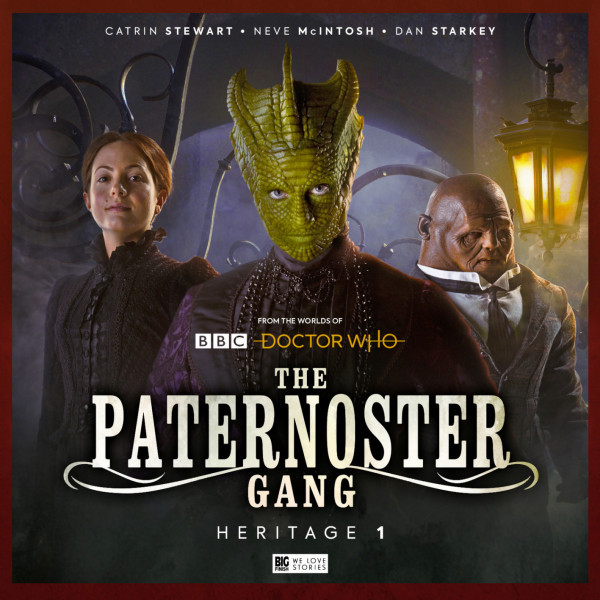
For example, on The Paternoster Gang, I know the three leads are really invested in it and have their own ideas, so every series starts with a meeting where Neve, Catrin and Dan throw ideas out there. And lots of them get used - it’s a really rewarding process.

Forgive me this one – my writing pals at Project Torchwood wanted me to ask “How do you get such great writers all the time?” and also “Is there ever any chance of fan writers working for Big Finish?” – which I think means besides the Paul Spragg competition, is there a potential pathway for ‘fan’ writers to becoming Big Finish writers? 

And also, I guess, how does it work in terms of writers for particular universes? Are there writers that you instantly know you can go to for, say, a Third Doctor story that will take that range forward, or writers who can always be relied on to turn out a cracking Torchwood? Any strict rhyme or reason, or, as you have a good range of writers at your disposal, does it come down to an instinct of who will do well within a particular universe, or with a particular story brief?

David: It’s a good question. We have an ongoing dilemma in that we always need new writers because we’re so busy, but because we’re so busy we have limited time to develop new writers. And ‘develop’ is the key word here - all scripts can go through many rewrites and changes and tweaks, which is a time-consuming process and the writers work closely with our brilliant script editors. 

So someone relatively new to the audio writing can take a lot of the script editor’s time. So we have to limit the intake of fresh writing talent - and we seek that out ourselves. We just don’t have the infrastructure in place to have a formal free submissions system.

The best tip for anyone who wants to write Doctor Who is to keep writing and writing and writing. 


And I think the best Doctor Who writers don’t just want to write Doctor Who - they want to write all sorts of things, but Doctor Who is an important part of that. Get as much experience and set your sights as wide as you can. It’s a big audio industry out there, and there’s a lot to learn. 

Are there any universe expansions that are now officially never coming back? Any more Jenny on the way?* Second set of New Earth stories? Dan Dare? Similarly, any one-offs possibly in mind for future series? Shilling and Sixpence or the like? Im guessing any plans for future Lives of Captain Jack releases are pretty much in abeyance right now? 

(*We asked, just before a second set of Jenny adventures was announced(!)) 

David: I mean, Jago and Litefoot is now sadly over, because we lost dear Trevor Baxter. We reached a very good ending with Counter-Measures, and my feeling at the minute is Id hate to undermine that ending by making more. But never say never. 

With Big Finish being the biggest player in the expanded universe of quite a few fandoms now, and with so many projects and universes on the go at different stages at any given time, is it ever tough to keep up with where each universe is in its story when you’re building the next instalment for it?

David: Not really - I just ask Matt Fitton! The man is a Big Finish encyclopaedia! 

What are the biggest challenges you face when expanding a universe? How you decide on a tone that takes a universe forward, while still being recognisably similar to what the fans have loved about a universe before?

David: I’m not sure that retaining the tone is a challenge, really - that’s part of the joy of it. Finding the authenticity in any range is in our DNA - it’s what drives us. I’d say the biggest challenge for me is always confronting my own nerves - just making sure that everyone has a good time, because that then infuses the production. 

If I’m working with Alex Kingston for the first time, say, I want her to have such a great time that she will come back for more. When Christopher Eccleston steps through the door, I want him to feel ‘Hey, this is a lot of fun.’ Those are the things I worry about - the people. 

This one’s not a question, just an opportunity taken to say thank you, for all the universes that have improved fans lives – my life – immeasurably. I first came into Big Finish fandom by ‘taking a chance’ on Spare Parts (nothing like coming in on a high!). It’s been brilliant so far, and I’ve no doubt it will continue expanding universes – and minds – for decades to come. Thanks, David – and thanks to all who make it happen.

David: Ah, that’s lovely - thanks so much. Seriously, we’re so lucky to do what we do. And I’m so grateful to Nick Briggs who plucked me out of an unhappy job 14 years ago and offered me this role at Big Finish. We really make a lot of this stuff for ourselves and hope that other people like it - so the fact you do means a lot!

Reviews The Five People You Kill in Middlesbrough by Tony J Fyler


Tony’s…not going to Middlesbrough. 

Spoiler: if you’re a fan of Doctor Who or Torchwood who complains that the show is too busy pushing a woke agenda, and that you don’t like it when it gets all political – switch off this audio immediately. It’s not for you. 

But then, if you’re one of those fans, Doctor Who since practically the dawn of Jon Pertwee hasn’t been for you, so how you’re still here is a mystery. 

But this Torchwood story, more than most Doctor Who or Torchwood, is in your face political. 

It’s also in your face relevant, with a staggeringly incompetent government and a cloud of death that can kill on contact (in this case, the result of a crashed spaceship in Middlesbrough, rather than, say, a pandemic virus). Also in this audio, a dithering, worse-than-useless Leader of the Opposition, too terrified to annoy anyone to actually do anything (though with an unfortunate tendency to find themselves accidentally supporting extreme right-wing events with gifts of jam (ahem!). The operator of a billion-pound health app that doesn’t actually work? Yep, she’s here too. A government spin doctor who breaks the rules he himself sets (complete with mention of getting his eyes tested)? Check. Demented radio ‘truther’ who believes in the New World Order of ‘banking powers’ being behind all the ‘lies’ about a Middlesbrough incident? Yep, we have one of those too. 

The Five People You Kill In Middlesbrough is a phenomenally brave Torchwood story to release in the current climate. But if for instance you’re a fan of verifiable reality and virology, and not a fan of political idiocy, chicanery, and apathy, conspiracy theories, antisemitism or the staggering human gullibility that has cost huge numbers of lives in our real world, you’ll probably love it. 

I absolutely love it. Which tells you where I stand on a whole lot of issues. 

The weird thing about this release, if anything, is that it exists at all. Pitching Yvonne Hartman against more or less the whole modern British world takes her beyond any prior Torchwood world or timeline – even the world of the ‘New Torchwood’ box sets, Aliens Among Us and God Among Us. Trying to fit it into any real Torchwood chronology is probably a mistake. It’s more or less an unashamed cri de coeur on behalf of the rational in an increasingly insane world, and an example of what someone who had the power and opportunity of Torchwood behind them could do if they existed in our world and had frankly had enough of it all. 

Another slightly odd note of course is that Yvonne Hartman in TV Torchwood – and largely in the subsequent audios – has some practically 19th century views on ‘making Britain great again,’ and cares for ‘the people’ in a more or less abstract, ‘they should be protected for now, if all else fails’ way, rather than with any particular warmth or emotional engagement. 

But there is of course one thing that absolutely gets Yvonne Hartman’s goat, and that’s inefficiency. Throughout The Five People You Kill In Middlesbrough, she advocates tirelessly for a simple solution. The so-called Icarus Protocol – nice work in the naming department, there – would prevent any alien devastation from, say, a crashed spaceship – from affecting (or indeed, infecting) anywhere else beyond a given boundary. But the Secretary of State for Defence, Alfie Scott (Tim Bentinck giving us his ‘bluff northerner’ – in a performance very close to his ‘Tommy’ of Torchwood One, again suggesting Middlesbrough is not to be taken as part of any previous Torchwood chronology) has ‘received other science, and we’re following that science’- which amounts to little more than building a ring road. Even when it emerges that the Defence Secretary’s other pet project, a missile program, may have been responsible for shooting down the ship that devastated Middlesbrough in the first place, and that the ambassador of the aliens in question has a plan that could easily undo the devastating damage of the crash, Yvonne can’t make those in government listen to her, can’t make them give enough of a toss about human beings to put aside their self-interest. 

When it comes to cordoning off the rest of the country and the world from the disaster hotspot, she runs into crisis manager Mo Simister (Sara Powell), who costs the public billions of poundsworth of tax revenue for a particle tracking phone app that simply doesn’t and never could work, and who pays a specialist in red carpets to establish a cordon. With her, it’s not that Yvonne gets further, particularly, but she does plague the ever-living daylights out of her, using Torchwood tech to try and make Mo see sense. 

We won’t spoiler you with the details of whether she succeeds. We’ll just refer you back to the title of the release… 

With short-sighted political guru Caspar Beacham (only the actual Dennis Law, popping his Big Finish cherry, and appearing to have a good deal of fun doing everything but driving to Barnard Castle), Yvonne is more fundamentalist, essentially tricking him into breaking his own rules in full view of the public, and letting the world’s media know that people should evacuate from London in a big hurry, because after all, when the rats are leaving, it’s time to pack a bag and drive into gridlock. 

And with Lancelyn Green, the ‘banking interests’ truther who describes himself as ‘The Lance Of Truth,’ we get the only real hint that The Five People You Kill In Middlesbrough fits into any kind of Torchwood chronology, because Yvonne uses a piece of alien tech that is the subject of a previous release, The Crown, by Jonathan Barnes. 

Without spoiling it for you if you haven’t heard it yet, it’s an interesting dip-back into previous Torchwood audio, and ultimately, if it existed, it would be too tempting to use on fact-averse, fact-perverse bloviating spokespeople for the absurd, because if you argue with them, you just become ‘part of the plot,’ and their audience believe everything they say – to the collective harm of the whole society. The Torchwood solution is intensely cruel – but also more effective than anything available to us in the real world. 

Sure, Yvonne’s way impacts the whole ‘freedom of speech’ thing, but she’s convinced it’s for the betterment of society as a whole after some of Lance’s listeners die, marching confidently into the cloud of Middlesbrough-death because they believe his proclamations that the Middlesbrough crash is a hoax designed to keep people controlled. 

Overall, The Five People You Kill In Middlesbrough will be a cathartic experience for lots of people frustrated by the catastrophic, deadly folly of some leading western governments. If, like many people, you’re convinced that there are bacteria in a deep ocean trench that could handle a national or international disaster better than the government you have, you’ll find yourself identifying with Yvonne’s frustration as she comes up against ineptitude, self-interest, graft, lies, idiocy and utter contempt for human life. 

For anyone who thinks science-fiction shouldn’t come close to real-world politics – less cathartic, more irritating. That’s probably a criticism Big Finish is anticipating, because the piece itself is said to be written by… Yvonne Hartman. Mm-hmm. 

In which case, all hail, Ms Hartman. You did your duty, for queen, country, and rationality.

Sure, a handful of people had to die. The world kinda got better as a result though, so, no harm, no foul, just possibly the best Big Finish of 2021 so far. There’s been some absolutely breath-taking drama from Big Finish in 2021 of course, but if you need the kind of catharsis of a world-class truth-telling stand-up comedian to shake out some of your fury at the world in which we live, The Five People You Kill In Middlesbrough is going to ring every bell you have.

Thursday, 6 May 2021

Reviews Torchwood: Gooseberry by Tony J Fyler


When Owen Harper (Burn Gorman), Torchwood’s medic, sometimes walking dead and King of the Weevils, and Andy Davidson (Tom Price), the organisation’s on-again off-again traditional police liaison, star together in an audio drama from Big finish, 90% of the time, some really dark and creepy stuff invades the next hour of your life. 

They’ve been caught up in domestic prison/torture horror in Corpse Day, searched mountains for victims of a grisly child killer in The Hope, and…erm…chased the ineffable monkey of good luck around Cardiff. 

OK, 66% of the time, some really dark and creepy stuff invades the next hour of your life. 33% it’s just weird. Fun, and still with dark moments, but weird. 

So which side of the dark and creepy/mostly just weird divide does their fourth pairing, Gooseberry, fall on? 

Well, it’s fairly dark in that it develops into a study of addiction or obsession that leads both to tragic consequences and to a deeply human disregard for those consequences on the part of the obsessive. But it would be a mistake to say it’s dark…by their standards when they get together. It’s certainly more than half-past light and frothy, but by their standards it’s about quarter-to dark. That feels like a deliberate decision by writer James Goss – there would be ways to go much darker with the story of this premise than he goes here, but you’d run the risk of straying into audience-depressing territory if you went much further than Gooseberry goes. 

The premise of the story? 

Andy Davidson has a girlfriend. 

Exactly – it’s not what you’d call earth-shattering, as a premise, is it? 

There’s so much to it than that, and James Goss draws you in to the complications that arise from Andy Davidson having a girlfriend before the credits even roll, with a single, economical line from Owen. The thing about which is, if we’re keeping you all pristine and spoiler-free, we can’t tell you what it is. 

To know would really blow the impact of that moment, and that moment’s worth preserving because its consequences collapse in on you while the theme plays, and the drama expands in your head as you begin to understand the ramifications you’re about to hear played out.

Andy’s girlfriend, Caite, is played with a fabulous joie de vivre by Lois Chimimba. And Caite has a secret. A secret Andy has yet to notice, despite convincing himself he’s in love. And a secret which Owen clocks within seconds of meeting her. 

That inevitably draws the two of them into an immediate, intimate-but-different relationship. It’s not a relationship of traditional lust, but there are elements in their dynamic that make it feel interestingly transgressive. It’s more than ‘my friend fancies my girlfriend.’ In fact, it’s much more visceral and primal than that, because Caite’s secret is something that can make Owen – dead man walking Owen – feel alive again. 

Imagine that for a moment. You’re dead, but you’re still here, in your body. Your senses don’t work. You can’t smell coffee or enthusiasm, bacon or raindrops, you can’t taste love or chips or regret or tears. 

And then you meet someone who can give that back to you. 

What would you not do for them? For more of that feeling? 

That’s the actual premise of Gooseberry – Owen gets a chance to feel alive again. But to a dead man, life is more addictive than it ever was when he had it the first time round.

In some ways, there’s a positive message to be taken from that premise – enjoy everything you have, because you have so much more than you’re conditioned to knowing. But in the tack we take in Gooseberry, Owen begins to exist for those moments when, with Caite’s help, he can peek back through from where he is, and feel life in all its rancid, wonderful complexity. 

It’s not traditional lust – it’s a lust for life. And it’s only fair to say that Louis Chimimba plays it straight – the lust is very much one-sided, Caite sharing her gift with Owen more and more only because he wants and needs it. Her love for Andy feels real the whole way through, and she never displays what in TV Torchwood you’d almost expect – some sign of being out for a bigger prize, some verbal tick which on re-listening you’d point to and go “Ahh, you see?”

It's also worth acknowledging the levels on which the story works. Sure, it works on its surface level, as Owen increasingly demanding something he feels he needs, and Caite’s consent to it starting off eager to share with him but becoming increasingly resentful of his demands over time. 

Especially because there are consequences to her gift. Consequences which aren’t immediately clear as the two explore what it can give to Owen, but which increasingly, Caite warns him of, and Owen stops caring about. Even when the consequences come home to roost, Owen wants to carry on, wants to use his Torchwood privileges to make sure Andy doesn’t find out about what the Gooseberry has been getting upto with his girlfriend.

This is the interesting duality at the heart of the story. You can listen to it on its surface level, and of course, Owen’s journey into moments of ecstasy that make life worth living and damn the consequences also works as a drug addiction parallel. 

But more than that, it works as an actual, traditional-lust affair story – especially because as time goes on and Owen throws more and more caution to the wind, he goes to more extreme lengths to make sure Andy doesn’t find out – destroying lives, memories and on some level his rational morality (such as it is) in the process. 

Andy, he reasons, may love Caite – or at least, what he knows about Caite. But Owen needs her. Physically, mentally, even almost spiritually, which for a man who knows the darkness is all there is beyond his life is really saying something. 

It’s a journey into the sacrifice of every principle, every standard, in the search for moments of light against the darkness, and Burn Gorman was absolutely born to play Owen in this story, his gift for characters on the edge of concepts like good and evil really bolstering the boldness of the writing here. 

Tom Price, meanwhile, is able to show what has at some other points been told – Andy Davidson is no fool. Dogging the steps of the not-couple as they go beyond the reach of principle, he’s a kind of implacable avatar of destiny here. 

For all Owen says he respects Andy enough to lie to him about what’s really happening, it’s an insult from Owen to automatically assume that he can outwit ‘Plod,’ as he calls him, especially as his removal of evidence is so typically…Torchwood. Subtle as a sledgehammer in the face, and self-congratulatory to boot, Owen reckons without the grounded, dogged determination and the copper’s instincts of Andy Davidson. 

That leads to what on screen would have been a classic and impressive visual effects finale. Here on audio – and surprisingly, for Big Finish – the ending feels a little underpowered, the resolution of the fundamental threat feeling a little pushed for time, and lower in Owen angst than befits the ultimate dilemma it offers him: continued feelings of being alive versus…erm…well, versus badness (Spoiler-free, remember?). 

What feels certain at the end though is that the relationship between one of Torchwood’s best Odd Couples will be – or should be – significantly changed in future audio adventures. Andy has given Owen so many chances to do the right thing, and been perpetually disappointed, not so much in terms of the Gooseberry factor of running around with a friend’s girlfriend, but more in terms of doing the typical Torchwood thing, and not crediting him with the intelligence to see beyond it. Whether they can be the almost-sort-of-friends they’ve been before must surely be in question from here on out. 

Pick up Gooseberry for a cracking, fast-paced relationship drama with two of Torchwood’s finest. With the perfectly-pitched help of Louis Chimimba, Gooseberry gets to the fundamental truth of Owen and Andy’s friendship, and leaves it in a very different state to how it finds it. It’s a high-octane ride into life, death, love, need and lies, with a light touch and a Torchwood twist. 

Sunday, 7 February 2021

Reviews The Crown by Tony J Fyler


Tony takes the crown. 

If you’re going to do a festive Torchwood, it makes a lot of sense to go with Queen Victoria.

She’s the centre of your Venn diagram when it comes to Torchwood and Christmas. 

The Crown, by Jonathan Barnes, has a plot that’s not especially festive, but is set at Christmas, and follows a great Victorian tradition of Christmas ghost stories. 

Here, a couple of legends come together – the legend of a false crown, which if worn can reduce someone to invisibility, to inconsequence, to a position where they are either ignored or dismissed as trash, and the legend of an accompanying death-bringing mythic figure, the Ferryman, who has his own rhyme, and is only visible to those for whom he comes, to drag them into death’s embrace. 

So – y’know – it’s a cheery one. Ho ho hooooly Hannah… 

What complicates matters here is that Victoria Regina, Queen of Great Britain, Empress of India, Defender of the Faith, etc, etc, runs into a ‘common personage’ in the grounds of Sandringham. A common personage who should not by any account be there. And a curse is put upon Her Majesty. The curse of The Crown. 

That means that, while all the business of the state goes on as normally as possible, Victoria Regina, Queen of Great Britain, Empress of India, Defender of the Faith, etc, etc, is missing. Fading into irrelevance, at first in the corridors of her own palace, then ejected into the streets like a beggar. Forced to plead at the roadside for coins with her face stamped on them. 

When Victoria turns to Torchwood, it’s as though she’s only there for moments at a time before she fades out of their visual memory. And so, after months of wandering her kingdom as a vagrant, sleeping rough, being buffeted by the forces of harsh Victorian economics, she goes in search of a doctor. A very particular doctor, who might just be able to see her for who she really is, and help her escape the curse of The Crown. 

This is the premise of Jonathan Barnes’ story. It’s fair to say there’s not a lot more to it than that in terms of plotting – your interest is maintained through much of the running time by the atmosphere and character development of Victoria as she takes you through her experiences. Rowena Cooper has been a great Queen Victoria since she began in the audio Torchwood world, and this story gives her a lot to get her teeth into. Audio Torchwood is also careful never to be too lenient or kind to Victoria, who clearly had a core of steel by the time she became the older woman she is here. So, while this Victoria acknowledges the brief relief of suddenly not being the object of every subject’s eye, she quickly becomes indignant, self-absorbed and annoyed at being ignored and reduced in her stature, determined to find a way to shake off or pass off this curse, even as her influence in the world dwindles from the highest station to the lowest. 

And while she rails against the indignities heaped upon the poor and the indigent in her kingdom, this is no Victoria’s Christmas Carol. She’s not changed unduly by the eye-opening experience, or consumed with a socially reforming zeal. These experiences may have been terrible for her, but the thought doesn’t seem to penetrate that they would be terrible for everyone. Her main concern is getting out from under the curse, and being a queen and an empress, she makes no spurious promises to gods or monsters, ghosts or spirits to reform her ways or her kingdom by way of bargaining for her freedom. No, she is Victoria, and she will be free of this curse, either by breaking its hold somehow, or by passing it on to some less inherently important unfortunate. They will not deserve it, but these things must be.

The doctor she finds, Dr Gideon Parr (Derek Riddell), is something of a specialist in delusions of grandeur, and it’s in this capacity that the ‘woman who claims she’s the queen’ is brought to him. The question is, can Victoria make him believe in her story of curses, crowns and deadly ferrymen? And if she can, what then? Can Gideon Parr help Victoria shed the cursed Crown, and re-assert herself on her throne? 

It would be tempting the spoilerman to tell you the answers to these questions of course, but let’s always keep firmly in front of us the fact that this is Torchwood. There’s always likely to be more going on than at first meets the eye. This time round, that’s truer even than normal. Trust nothing. Believe no-one. You may not know the whole story until the very end. Hell, you may not know it even then. 

While it’s one of the less convoluted Torchwood plots of recent times, this story brings a distinctly Jago & Litefoot vibe to its run-time. The curse of The Crown seems like a genuine curse, rising from folk myth rather than particularly explained as alien. There’s fun in that, in that it leaves the way open for potential future stories involving the same mythos, and like all the best ghost stories, it leaves you perplexed and not a little chilled at the end. 

There’s at least one twist late in the game of this story though, that will make you realise the stakes of the story are higher than you might have realised. Most two-hander dramas (which this mostly is, with occasional interesting interruptions) are a game of chess, a cat-and-mouse tango for the upper hand. When you pit the Queen Empress against a master of delusions, you can never be entirely sure who’s winning till the game is over. So, the thing that chills you most may not be what you’re expecting. 

As we mentioned, it’s not by any means an ostensibly festive story, but in The Crown, Jonathan Barnes has delivered a briskly creepy, philosophically intriguing story with a Christmas tinge. If Dickens’ A Christmas Carol is a story of how a hardened heart can be melted by a difference of perspective and an observation of the hardship of others, of how a change in circumstance or a change of viewpoint can soften one’s attitude to those less fortunate than oneself, The Crown is pretty much The Anti-Carol. Victoria’s experience of invisibility among the poor and the insignificant turns her to thoughts not of compassion and acceptance, but of vengeance for the affront and the wrong done to her, and to immediately escaping her newly-imposed condition. When we find out the truth at the end of the story, there’s something impressive and something horrifying in it. Which perhaps makes sense for a queen who – in our mythos, anyway - saw the potential of the alien and founded the Torchwood Institute to fight it, to harness it, and to use it specifically in the interests of her land. 

If you’re looking for a heartwarming Christmas tale, The Crown isn’t it. The Crown is perhaps a fitting topper to 2020 though, a cold, glittering curse to round out the year. It’s a beautifully written curse, and both Rowena Cooper and Derek Riddell power their performances with precision, delivering the pace you need and the atmosphere you’ll appreciate to make this a chilling story on both mythological and human grounds. Give it a whirl as you kiss goodbye to the year of a new transferrable ‘curse,’ but perhaps have a funny favourite on standby to lift your spirits afterward.

Reviews The Three Monkeys by Tony J Fyler


Tony hears no evil. 

Some character-combinations make you tingle before they’ve said a word. 

Sometimes, that’s the result of your mind anticipating how great their chemistry would be. 

Sometimes, you’ve had prior experience of how they work together and you look forward to them on that basis. 

Sergeant Andy Davidson (Tom Price) and Owen Harper (Burn Gorman) are audio Torchwood’s prime odd couple. Every time they’ve worked together, they’ve hit the script, the drama, and most particularly the comedy out of the park. 

In The Three Monkeys, from James Goss, the comedy is more to the fore than it has been in the pair’s other outings, but that lets it ripple with unsettling undertones when the genuine threat of the episode is revealed. It’s also probably worth noting that their previous episodes together have involved a suburban torture chamber and a serial child killer, so bringing the comedy more to the fore than those is a) not that big a challenge, and b) an enormous relief.

The premise of The Three Monkeys is fairly simple. 

Some guys have all the luck. 

Bastards, mostly. 

Unscrupulous, thieving, conniving bastards with no thought for the consequences of their own actions on the little people down below. 

It’s a strange Twilight Zone concept, obviously, but try to go with it. 

For the most part, unscrupulous bastards seem content to believe that their unscrupulous bastardy brings its own rewards, and the world, complicit in their gittery, seems content to let this be the case. Being ruthless, being heartless, being devoid of care for the consequences of your actions just breeds success, we say. 

But what if there were more to it than that? 

What if, like Aladdin, they had help to get their wishes fulfilled? To get the results they wanted? What if they had a shield from the consequences of their actions, something that – to borrow a phrase from TV’s Robots of Sherwood - bestowed a climate of extraordinary benevolence on everything they did? 

Somebody’s rigging the system, and Andy Davidson wants to bring them down. 

In this story, Andy’s reasons are more personal than police – some of the consequences of the actions of one particular protected bastard have landed squarely on his family. Lives ruined. Reputations destroyed; people who died as a result of the stress dumped on them by the actions of a mogul. All those consequences, swept under the carpet with a phone call, or escaped through acts of god… 

Rule 1 of Torchwood – never trust an act of god. The gods are malicious, and probably alien.

Owen, on the other hand, has been sent along as an expression of Torchwood curiosity – or ‘to help out a mate,’ if you believe that sort of thing. He goes along as Andy, bless him, tries his hand at a little housebreaking to try and find the secrets that can bring his man down for good. 

What he finds…is a monkey. 

A small, cymbal-playing toy monkey, of the sort which, for those who know the stage show or the movie, serves as an entry-point to the story of the Phantom of the Opera (the story of a man who has seemingly unlimited power and success until the tide turns against him…).

Given that the monkey is hidden at what seems like enormous expense and difficulty, it seems like an unusual prize, and an even more unusual guardian from the slings and arrows of outrageous wossname. 

The rest of the story seems on the surface to be much more character-based than plot-driven. But then…just possibly, that’s what the monkey wants you to think. 

What the monkey is, and how it works, would be a detail or two too much to give you, but along the journey of the second half of the story, there are character developments, revelations and deepenings between the two Torchwood stalwarts, and you begin to hear them more clearly than they’ve been heard, certainly in a while, possibly ever. 

Why do they work together so well? It’s the same sort of answer as why yin and yang fit together to make a circle. Why, to borrow from another geekdom, Crowley and Aziraphale work together so well in Terry Pratchett and Neil Gaiman’s Good Omens. They’re almost complete opposites, going in different directions, but meeting in a mid-point on their journeys and finding they fit. Owen, the man with a great future behind him, the man who loved, and was to some extent betrayed and robbed by death, is alive beyond the point of death, almost rejected by death and forced to live on, but robbed of all life’s sensual wonders. His viewpoint is compassionate but downward-focused, unsure when this unnatural life will end, but aware that only nothingness awaits. 

Andy is a man who sometimes feels the significance of his life has passed him by – the moment when Gwen was chosen for Torchwood, and he wasn’t, robbing him of a whole other life of meaning that he could have had. His focus is compassionate too, but upward-looking, determined that he’s still here, and every day he is, he can do…at least something to make life better for people. The family drama revealed early on feels like an affront to that conviction. The idea that he can be as good and as positive as he likes, and some bastards still have all the luck offends him. And, more pertinently, the real-life consequences of such people having all the fortune offends him even more. 

And so, in their differently-facing compassion and curiosity, they find themselves together. In a car, in Cardiff’s outlying regions. With a monkey. 

There are glorious comic moments here – an audio riff on a Men In Black scene where Andy’s busy burgling and trips off alarms in the distance while Owen, trapped in a car, is questioned by police is a particular joy. But More than that, there’s a thin crust of banter laid over a growing odd-couple relationship of wary friendship, which endures some plain speaking as the fate of the meddling monkey (We’re sorry, it was there, we had to use it!) hangs in the balance. More and more as the car chase between our hapless heroes and the forces of gittery and officialdom goes on, each of them is forced to face up to some of their own self-protective fantasy. The things they say they want, the things they plan or planned to do are all very well, but if they could be granted the power to do whatever they wanted…would either of their lives change very much? It’s time to find out. Hold the monkey… 

James Goss is one of those writers you can rely on to give you good fun for your money, and usually to use it as a carrier medium for deeper, meaningful points as you go from one end of his stories to another, without ever weighing you down unnecessarily. There’s some great character work here about Owen’s status as a dead man (an ongoing journey in the audio Torchwood that never got the space or time it really needed on-screen), and while it’s the lightest of their episodes together, that works well as a medium for them and us to find out more about both Owen and Andy as human beings, rather than as characters serving a plot.

Try The Three Monkeys for a compassion-fuelled romp with dreams, aspirations, a solid dose of self-realization and a monkey. You know it’s what your days have been missing.

Saturday, 9 May 2020

Reviews Tropical Beach Sounds by Tony J Fyler


Tony’s chilling beachside.

If you’re looking for soothing British voices, you can’t go far wrong with Michael Palin. Python, world traveller and interpreter of the world’s many wonderful madnesses for the viewer at home, Michael Palin, when he wants to use it, has one of those voices that can make you believe things are all about to work out just fine.

Jussssst fine…

While presumably the Tim Foley’s script came first, it’s a joy that Tropical Beach Sounds and Other Relaxing Seascapes #4 seems to absolutely need a voice like Palin’s.

It starts off like a relaxation or meditation tape, all inner light and breathing in, but evolves into something more akin to a walk-through Choose Your Own Adventure book, as the voice of Palin – and make no mistake, it’s identified as the voice of Palin within the piece - takes ‘you’ on a journey through the inner mindscapes that make up your psychology. Joyfully ripping the piss out of the ever over-convenient translation of things and people into archetypes and psychobabble, it takes you on a journey into something called…The Hub. The Hub is a closed mind, it tells you, that needs to be opened to let the light in. Captain Jack is the Captain of your Destiny, the version of You that you were meant to be. Ianto Jones is the spirit of positivity. Toshiko Sato is all things intellectual and inquisitive, Owen Harper all things dark and negative…and so on.

It’s an invasion story, absolutely, but it’s delivered in the tones of Palin as a psychic and psychological battle between good and evil, yin and yang, the force of authority and the force of…of…of something or someone who keeps trying to turn the tour back into a simple seaside meandering.

Palin is of course well experienced with vast swathes of text, but he’s actually the only voice you hear throughout this story, which makes it a remarkable achievement. The storyline itself – invasion via meditation and psychobabble balderdash – is very cheeky, very Torchwood and inordinately good fun. Plus you get to hear Michael Palin turn on the dime of a moment, from calming presence in your head to vicious, swearing, power-addicted monster, quite prepared to prey not only on your deeper psychological fears, but to threaten pain, humiliation, you name it, when ‘you’ don’t do as he wants. It’s a rewarding listen, this story, but for something with perhaps the oddest title in at least recent Big Finish history, it has moments that are swift as a dagger and dark as motive. Be warned – you probably need to be having an ‘up’ day to get through this one unaffected by the manipulations of its villain, because there are times when that villain echoes all the darkest thoughts you’ll have had about yourself, and the ending, while it’s ultimately positive, isn’t fought on the same battleground, so it might not give you the psychological rebalancing you need.

Normally of course there’d be performances to extol, but as a single-voice audio, it’s all Palin, all the time, and as such, it’s all pure joy. In fact, there are moments when the power that is Palin helps sell some of the script’s balder patches. Certainly, those patches are necessary to get you from the A-B of the story, but in lesser hands, they might well have fallen flat – moments for instance where the villainous voice in your head is clearly scrabbling for inventions to fit in with the psychobabble of the meditation tape ethos by which it lures its victims in, seeming to riff freely in the moment. That’s dangerous writing because it flirts along the borderline of intended floundering (in the writing) and unintended floundering, in the seeming moment of the invention by the villainous character, and you need someone with a particular gift for insouciance to sell the idea. Michael Palin, fortunately, brings exactly what you need to the recording.

There’s a very Invisible Enemy vibe to this story, but with twinkly achievement-noises every time ‘you’ have a human interaction with one of the Torchwood team – it’s not exactly a ‘Contact has been made’ moment, but it’s close – and what is actually happening, who and what the villain actually is remains a little unclear, but as the battle rages on for control of ‘you,’ Palin is able to imbue his own voice with the personalities of two separate characters at war, and while he rages and threatens the psychological violence of all your bad memories set free to flood through your mind, it’s actually just as often the physical threat inherent in the loss of control of your body that will make you go cold in this story – the Palin-voiced villain tells you they can make you do anything, and there are several examples of self-harm here, from the holding of a breath to the point of passing out to hitting a door over and over again, for no other reason that it hurts and damages the host, the ‘you’ that is increasingly controlled by the voice in your head.

The resolution to the story seems to suffer slightly from the single voice format – it feels like when the power of goodness is victorious, it could actually do with separation into the second voice, the voice of the force that’s been trying to frustrate the Palin-villain all the way through the story, but that would probably lessen the sense of awe that this story carries by being single-voice from start to finish.

All in all, Tropical Beach Sounds and Other Relaxing Seascapes #4 is absolutely worth a listen, not least because it’s an hour of Michael Palin speaking into your ear, but also because it acts as a kind of metaphor for the battle between positive and negative impulses, positive and negative views of yourself that will resonate with many listeners and fascinate even more. As a Torchwood story, it’s a neat inversion of the normal, with the story more or less told from the point of view of the villain, and oh yeah, did we mention it’s Michael Freakin’ Palin as a devious voice-villain from the depths of Who-Knows-Where trying to take over the hub through a meditation tape!

Don’t hesitate – it’s not like you can experience actual beach sounds right now. Experience the next best thing with audio Torchwood and Tropical Beach Sounds and Other Relaxing Seascapes #4.

Tuesday, 4 February 2020

Reviews Fortitude by Tony J Fyler


Tony’s all at sea

Torchwood – Fortitude is Torchwood with a difference, in that its one of the range’s occasional dips into the adventures of Queen Victoria herself, with no other active Torchwood operatives in play. As such, there’s a certain additional weight on Rowena Cooper’s shoulders as Victoria to push the listener through the tale, as Victoria, perhaps, is the character who knows the most about what’s actually going on – at least at first.

In fact, this is very much a Victoria-centred tale, designed more or less to show her in her older years with the concerns of one who feels the complication of her own death on the horizon. Released in the week that Doctor Who on TV was highlighting the importance of individual figures and the way in which they move the needle of the human experience (Nikola Tesla’s Night Of Terror), it’s a poignant counterpoint to the TV version’s ultimate optimism on that question. When Victoria dies, she tells the other characters in this story, there will be riots and murders, uprisings and mob rule as the world tries to shake itself into a different shape in the understanding of her absence. This is a Victoria who has regrets about some of her earlier actions, and who might, just possibly, be in the market for solutions that help her sleep a little easier.

None of which ostensibly explains why she’s swanning about on Victoria’s Most Haunted – a sea fort off the coast of Portsmouth, built to fight a French invasion which never came. Nor, for that matter, why she’s bringing the Maharaja Duleep Singh (Paul Bazely) along with her. The two have a somewhat spiky relationship – as the title Maharaja might suggest, he was born to one of India’s ruling families, but raised at court as a proper English gentleman (official version) or an exotic performing pet (his version, and the version with which we have more sympathy in a post-imperial age with a severe colonial hangover). It’s prrrrrobably true to say though that they never held knives to each other’s throats in the real world. If that’s a detail you’ve been waiting all your life for, look no further – James Goss has got you covered.

There are…imps on the fort, or ghosts, or voices at the very least, seeming to lack bodies to carry them about, and therefore unnerving the very bejesus out of most people who visit. Not so Colonel Crackenthorpe (David Sterne), army man with a dubious history of his own – not to say rather too much of it to be credible – who’s in technical charge of the fort, and who talks to the voices, and the thing which may or may not kill them all.

There’s also a storm which patently isn’t a storm brewing off the fort, kicking the wind-driven daylights out of anyone who tries to get near. Whatever it is that connects them all is less than a fan of Queen Victoria’s – there are amends to make, truths to uncover, sentient raging aliens with which to engage, and pasts for which to atone in this tight, creepy, MR James-ish story that will seldom let you rest between the opening bars of a Torchwood theme tune re-arranged for Victorian instruments and its final resolution.

That, if anything, is the keynote – if you’re a fan of MR James, and his unnerving stories of good people with flaws and those flaws catching up with them in creepy, nerve-jangling ways, you’re going to enjoy Fortitude.

There are three such people on the sea fort (assuming we give Victoria the benefit of the doubt about her goodness by this point in her life). That makes for a lot of uncertainty, plenty of questions, and several dollops of dubious or devious motivation, all lumped together with an alien something, a bunch of arguable ghosts and a mood-storm out at sea. While James is a solid marker for whether you’ll like this story, fans of The Horror of Fang Rock, Ghost Light and even JB Priestley’s An Inspector Calls should also swallow this release whole – it has the claustrophobic atmosphere and the sense of incipient disaster of Fang Rock, and the tone of Ghost Light, where no-one’s entirely sure what the hell is going on for the longest time, but everyone’s nerves are jangled by it nevertheless, a sense bolstered by Colonel Crackenthorpe at first bearing an audible resemblance to Ghost Light’s Redvers Fenn-Cooper. The Inspector Calls vibe shudders through the sense of accountability for one’s past which unites the three main characters – Victoria for her rigidity of view in her youth, which led to many errors, Crackenthrope for a possible crime which has blotted his life, and the Maharaja for an entitled indolence which has stopped him ever achieving what he might have done. There’ll be a night of reckoning on the sea fort, and little if anything is likely to be the same come the morning light.

The writing here is tense and twangs like tripwires hidden in mist, without ever looking or sounding like it tries too hard – again, the MR James reference is relevant, because that’s a trick at which he was a master. The point of which in this audio is that you engage with it tentatively, Victoria and Singh arriving on an unlikely sea fort after fighting through an impossible storm, but it winds you in, and in, and in, wraiths of wet mist pulling you into secrets, truths, half-truths, versions of reality as envisioned by each of the characters, and their interaction. Before you’re done, you’ll wonder whether one, two or all three of them are ghosts, you’ll itch to know the nature of the fort’s resident something, and you’ll find at least some of the answers to the character-questions you need answering before you dare to place your narrative trust in anyone.

Fortitude is Torchwood with a difference not just because it doesn’t feature any of the cast we’re used to, and takes us on a trip with the Institute’s founder instead. It’s different because the journey on which it takes you is chilly and clammy and damp, unnerving in a way the world’s allowed to be without a Jack Harkness or a Gwen Cooper to protect it. Unnerving in its shades of grey, its uncertainties and the shudder with which it will leave you, despite a resolution that promises some sunlight. It’s an initially unwilling confrontation of truths and mistakes, and it shows the possibility of change through communication, even when the mistakes have been grave in days gone by. Listen to Torchwood – Fortitude now, and any time you want a shiver down your spine.