Firstly I’d like to thank you Gary for saying yes to an interview. I was pleased as punch when you agreed. So welcome to Project: Torchwood Gary.
Gary: Hooray – all I need to see is the word “Torchwood” and I get a thrill. Glad to be here!
Has to be said your IMDB is eye popping when it comes to the variety of things you have been involved with and I know this will make for a very interesting interview. So I hope you don’t feel too overwhelmed by the number of questions we have lined up. Though in truth, I think we will have barely even scratched the surface.
Acting:
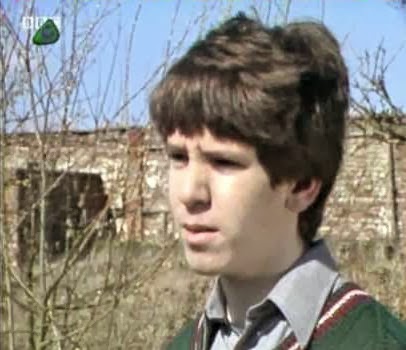
When I looked over your acting career on IMDB, I found my past popping up with some of my childhood favourites ‘The Phoenix and the Carpet’ and also ‘The Famous Five.’ I also have memories of my sisters watching ‘Look and Read: Dark Towers.’
Gary: The latter two are the ones that follow me around, which is nice. I love that Dark Towers keeps getting a new generation of viewers cos the schools yank it out of the cupboard now and again.
I especially have good memories of watching ‘The Famous Five’ in which you played Dick. It always looked like so much fun. Do you have good memories yourself of your time on the series? And of course of the other two shows you made.
Gary: Enormously; I genuinely can’t think of a bad moment on any acting stuff I did, other than my own performance, which is very wooden and awkward, especially in Dark Towers and Schoolgirl Chums, which were towards the end of my career. You can see why I gave it up – well, I certainly can!
How did you get into acting as a child?
Gary: I always wanted to be an actor, I think. Doctor Who played a large part in that (I wanted to be a Silurian from an early age) and also westerns. I always wanted to be a stuntman because I wanted to be the guy who got shot and fell off the roof tops. I practised a lot, much to my mother’s alarm. She eventually got worn down and took me to an acting school, one hour a week on Monday evenings in about 1974, probably hoping I’d get bored. I didn’t. After a while, I started going up for auditions and eventually started getting things. My mother loved this and became my biggest support – she started getting involved, initially chaperoning me (because kids legally had to be chaperoned) and then going on to do lots of her stuff herself that didn’t involve me (Tenko, Aliens, Superman II, Chocky, tons of stuff. She did far more than I ever did.)
Which of the three shows did you most enjoy working on?
Gary: They were all very different. I loved Phoenix because it was the first telly and I was just thrilled by it all, and it was a superb company. Famous Five was delicious though – two years of going down to the New Forest for the summer and playing in the sunshine at being TV stars. Look-In! I mean, I was in Look-In for goodness sake – a comic I read every week and suddenly there I was!! Dark Towers and Schoolgirl Chums were the two shows I did as a ‘grown-up’, not a chaperone in sight, so they were very different because suddenly I wasn’t a kid any more (although I was on Dark Towers cos I was significantly younger than anyone else). But on those last two I began to appreciate the other actors – that kid/adult barrier was gone and suddenly I was able to hang out with Christopher Biggins and Juliet Hammond-Hill or Lalla Ward and Barry Jackson and Martin Benson, all people I watched on TV as a kid, and now I was one of them.
After being a child actor, you did some acting as an adult, but stopped, it seems, in 1997. Was the reason for stopping because you were more drawn to the production side of things rather than being in front of the camera?
Gary: Actually I stopped being an actor in 1981, after two years with the National Theatre. The 1997 thing I’m guessing is The Airzone Solution, which I just did two shots on for Bill Baggs, the director, as a favour. But I haven’t acted professionally since 1982 after I was told I was too posh for TV in the 80s. As if!! I got excited by directing and editing while doing Famous Five – I learned what everyone on the crew did doing that series, and made sure I was never less than 100% on the ball for everyone, so I never made anyone’s life hell. I hope! That stuck with me through the rest of my career, so I always intended to go behind-the-scenes but got distracted by other things in the early 80s and sort of drifted away from production by working in the BBC press office. I then got a job as a floor runner on news shows in 1987, then a year later in drama up in Manchester on a brilliant series called Making Out. By then though I was also writing for Doctor Who magazine and the writing was more attractive to me than TV, so I left the BBC in 1990 and joined marvel full time in 1991 as editor of Doctor Who magazine.
How much has filming and production changed since you were an actor? And what do you think are the most significant changes?
Gary: When I did Phoenix and the Carpet, the studio stuff was those four big cameras in proscenium sets. But Famous Five and Schoolgirl Chums were single camera film shoots, Dark Towers single camera OB. As time went on, the studio set up was phased out and now everything is made with one or two cameras on location or in studio and its so much faster and efficient. Also in the 21st century, the people making TV have grown up with it; they understand the language of the medium because they saw it evolve. When I did Phoenix, the BBC was still, largely, staffed by old men who’d grown up in theatre. The average age of a TV exec in the 70s and 80s was 50. Now most execs are in their late 20s, early 30s. By 35 they own their own companies. It’s a young person’s game these days (god, I sound like an old fogey) but that’s the biggest change. It’s fresher, more youthful and energetic and far, far more cut-throat.
In recent years you have often worked with young actors, on a production level, especially with Doctor Who and Sarah Jane. Do you think there’s more or less pressure on young actors today? And do you think it’s more enjoyable for them now; than it was in the past when you were a child actor?
Gary: Yes in many ways. They get treated less like kids and more like intelligent, thinking individuals, which is great. But they are also far more hidebound by Health and Safety and Insurance-type regulations (that’s no bad thing, by the way). When I did Famous Five, I did my own stunts. I stood on top of a five-storey building, crawling along the front by myself, no ropes attached. Or I climbed down a forty foot tower on a rope ladder. These days you’d have stunt doubles, or fake it so they were three feet off the ground. I did stuff back in 1978 that the 2013 me shudders at and we’d never even consider putting our kids on SJA or Wizards v Aliens through that. Nor should we :-D
Script Editing, Screen Writing, Producing and Directing:
How did you get into script editing and screen writing? And which area did you start off in first?
Gary: First off, I’m not a screen writer, never written for telly or film in my life PT: Dang IMDB failed me! It said ‘writer’ lol! At the BBC here in Cardiff, I was a script editor from day one. I was up here writing a book for Russell T Davies called Doctor Who – The Inside Story, while my day job was running an audio production company called Big Finish, where we made full-cast audio dramas for Doctor Who. Russell asked me if, after 8 years, I was bored yet of BF and although I wasn’t, I clearly must have suggested in my body language that a new challenge wouldn’t be unwelcome. He was a big fan of a lot of the stuff I’d produced, script edited and directed for BF and suddenly I was asked by one of his team if I’d consider moving to Cardiff and joining the staff. It took me less than a second to say yes. All that work at Big Finish had paid off.
Could you explain what script editing means and what entails?
Gary: (I’m stating this in the present tense cos it’s simpler – but I stopped doing this nearly two years ago) So these days it’s quite complicated and multilayered. Let’s start off with what it doesn’t entail. I don’t rewrite scripts. I don’t commission scripts. I don’t so much as change a comma into a full-stop without the writers’ say so. What I do is be there in the meetings with the execs and producers where they decide on what they want in the series. They’ll say “Let’s get such and such a writer to do Story 5”. They may have an idea of what they want, they may leave it up to the writer, it usually depends on who it is. I then contact the writer, work up a storyline with them, take it to the execs, feedback any thoughts comments and after a few rounds of that, we go to script. The writer does a first draft. I’ll work with them, making suggestions to plot, things like that – basically a fresh eye. When we’re both happy, it goes to the execs and then I work as the general go between (often with great diplomatic powers), passing thoughts and notes back and forth between the two parties, arranging face to face meetings, getting them contracted and paid, checking none of the names and places present legal problems, getting the scripts out to everyone, keeping abreast of all changes and issuing colour-coded amendments, and then after filming, working with the ADR teams and finally after transmission, making sure all the paperwork is up to date, all the rights to characters, monsters etc have been assigned to the right people. Phew. That’s a lot. While at the BBC I had an additional role which was the over see all ‘additional fiction’ on all three shows, so any books, audios, comic strips, toy descriptions and non-fiction books licensed by BBC Worldwide had to go past me for authorisation. Initially I’d work alongside Russell on this but after about three weeks, he just said “You know what you’re doing” and left me to be in complete control of all that. At the height of Doctor Who and Torchwood and Sarah Jane (around 2007 – 2010) highest popularity, the sheer volume of stuff meant it was a fulltime job in itself. I didn’t sleep much :-) But I loved both sides of that job enormously
As we all know, you were the script editor for Doctor Who and its two excellent spin-off’s Torchwood and The Sarah Jane Adventures. Was this difficult to do at times? As they all seemed to be more or less filmed at the same time.
Gary: Yes and no, more because of the Worldwide aspects actually – next to Russell and Julie I was the only person across all the scripts and stuff for all three series. Other script editors could focus on their episodes of their shows, I had to know it all too. Which was great for me, cos I’m a nosey bugger. As official script editor I did all of Sarah Jane from Series 2 to the end, I did Matt, Joe, Phil’s and then Chris’s flashback episodes of Torchwood series two and I did Waters of Mars and the two-part finale for David Tennant’s run on Doctor Who. That’s all I did in terms of credited work. Mind you that’s a hell of a lot.
How did you become involved in, not just one, but all series?
Gary: I fell in love with the scripts for Torchwood series one on my first day when Brian Minchin gave me a load to read to keep me amused (including one or two that never got made) and so I immediately begged Russell and Julie to let me work on Series 2 if there was going to be one. I suspect I drove them, and Brian, mad with my enthusiasm for the show. Then while I was doing it, the chance came up to baby-sit the start of series 2 of SJA because Lindsey, who did series 1, was going off to another show for a few weeks. But once I got into SJA, I wouldn’t let go of it and ended up staying, so Lindsey and Brian handled all of Doctor Who series 4. I was going to do The Next Doctor but that quickly became apparent that there wasn’t time and so I begged to do Waters of Mars (cos it was Phil) and then Russell asked me to do The End of Time.
This also gave me the opportunities to co-produce the two animated episodes, as well as all the computer games, which was brilliant.
We all flitted between shows because it was the easiest way of working, to be honest. Lindsey, Brian and I were, I thought, a good script editing team. Then Brian and Lindsey got promoted while focussing on the Moffat era of Who – Brian started producing and Lindsey became a script executive and I stayed at script editor level (I was never good at playing the politics of career advancement and rather enjoyed doing what I was doing on SJA) and ultimately that led to me doing the first series of Wizards v Aliens too, although I left the Beeb shortly before it went into high-octane pre-production, but they kindly gave me an on-screen credit for the first story cos I’d done a lot of work on that before the fab Derek Ritchie came in to replace me – and he’s now on Doctor Who too, which is brilliant cos he’s very gifted.
What would be your most memorable moments from working on each of them?
Gary: Blimey. On Torchwood; getting Joe Lidster the job. On Sarah Jane; just working with Phil Ford daily. On Doctor Who, just working with Russell and Julie, for whom I would still walk barefoot across broken red-hot glass if they asked me to, because they are the best people in the business.
Did you ever want to write episodes yourself for the new Doctor Who or its spin-offs?
How did you get into doing producing work for the Doctor Who audios with Big Finish?
Gary: No, I didn’t want to script-write. I tried it for Sarah Jane, I was going to do the finale for series 4 but after a couple of drafts or ten, I sacked myself. That was a fun thing to do “Hi Gary, you’re fired” “Am I Gary?” “Yes Gary”!! I realised that I’m not really a dramatist, certainly not for the shows I was working on, under that pressure. I flaked out a bit (well, a lot)
As a keen anime fan I am interested to hear about the four Doctor Who animations you directed, ‘The Infinite Quests’ (2007), ‘Dreamland’ (2009), both with David Tennant as the Doctor and in the case of ‘Real Time’ (2002), with Colin Baker as the Doctor and the animated version of ‘Shada’ (2003) with Paul McGann as the Doctor, you not only directed, but also wrote.
Gary: The Infinite Quest came about through James Goss, who had produced the reconstructed The Invasion episode for the DVD with Firestep and along with the on-line part of BBC Wales wanted to do a Doctor Who on-line cartoon. As we worked on that (I was drafted in cos I knew how to direct the audio of the actors) I began to get a handle on the storytelling differences in animation and rather fell in love with it. When we came to do Dreamland, which was far bigger, James had moved on so I sort of ran it from the BBC Drama side alongside Anwen Apsden from the on-line team. We made a great team, and ended up doing all the computer games for Matt Smith’s Doctor, the last one, The Gunpowder Plot, we won a BAFTA for. We went for a different animation team for Dreamland just for a change of pace but because they were a games company rather than a pure animation house, maybe it ended up a bit too much like cut-scene animation from a 3D computer-game. And that wasn’t quite how we envisioned it after the original pitch that LittleLoud made to us at the start. But you know what? That’s budgets for you and so you live and learn – and I learned a lot from the great guys at LittleLoud, they were smart people; their enthusiasm was unshakeable and brilliant to be swept up by. For the computer games we worked closely with the amazing Sumo Digital up in Sheffield, who I loved. Brilliant guys and by the time we came to The Gunpowder Plot, we’d all learned so much. I’m very proud of The Gunpowder Plot, both in terms of gameplay and Phil Ford’s scripts.

The Real Time thing was many years earlier – that’s how I met James Goss actually, when he was working for BBCi in London – this was ages before anyone knew anything about the show coming back to TV. They’d done Death Comes to Time as a flash-animated webcast after the project had been dropped by BBC Radio. He approached me at Big Finish, saying they wanted to do more but didn’t want to go down the Death Comes to Time route again, so I pitched Real Time and bang, off we went. That seemed to make everyone happy so by 2003, it was decided to give Shada a go. I’m not a huge Douglas Adams fan and opted very early on not to produce or direct it because I didn’t think I could do it justice – so handed it over to Nick Pegg, who gets Adams in a way I never can. So my only involvement in that was just to take every available version of the script and prepare a version that could work both as flash-animated imagery as well as pure audio. Then once we knew Tom Baker wasn’t going to become involved, a further rewrite was necessary to McGann-it-up, and I wrote the prologue on Gallifrey at the start that explained the timey-wimeyness of how the Doctor could have had the same adventure twice. After that we were all prepared to do Real Time II and wrap that up, but BBCi decided not to work with us again, but instead do it all in house and that led to Scream of the Shalka. I’ve never seen Shalka (frankly I was pissed off that they’d learned from us and then ditched us, but hey-ho, that’s life) but I did feel slightly sorry for them that no sooner had they done this, than the show was announced as coming back and Shalka was relegated to a sort of limbo of not-really-true-any-more.
How different did you find the process of not only directing, but working in a very different medium to that of working on a set with cameras, etc?
Gary: Well I’m far more at home with audio and art than I am with ‘real people’ I guess, when it comes to directing and producing. I would love to direct telly one day, sure (I ‘directed’ a montage sequence in Torchwood series two when no one else was available – yes, clearly Richard Stokes was that desperate that he even asked me - but it didn’t involve actors other than a shoulder double for various Torchwood team members over the 20th century) but my instincts now are very geared towards voice and animation.
How involved were you with the actual animation process? Such as story boards and so forth.
Gary: Completely – less so I guess with Infinite Quest but with Dreamland and the games, I was there every step of the way with Anwen. And frequently butted my nose in when it wasn’t needed simply cos I wanted/needed to learn new things. I get very bored if I can’t learn things, especially from talented people, so I do tend to get under everyone’s feet. All the storyboards, designs, 3D builds etc. I’m amazed no one clubbed me to the floor and said shut up” cos I had an opinion on everything. But then, frankly, I had to because I was Russell and Julie’s eyes-and-ears, had their complete faith, so had to make sure that wasn’t misplaced. Same with Steven, Piers and Beth on the computer games. Although I’m not sure they had as much faith in me as Russell and Julie had, to be honest.
Can you tell the fans the story behind ‘Shada’ and the reason for creating an animated version of the story? And why the version of the Doctor was changed from the original that was Tom Baker?
Gary: The change to Paul was simply that Tom said no quite early on and so I said to Jason Haigh-Ellery let’s do it with Paul. It fitted our own internal chronology because the Eighth Doctor had met up with Romana and so off we went. And having a slightly higher budget from BBCi meant we could afford an entire team of guest stars rather than just one. Which was nice for Paul and I think Nick cast it expertly.
Author:
As we all know you are the author of both the Torchwood and Doctor Who Encyclopaedias. How much control did you have when it came to deciding what would and what wouldn’t be included?

Gary: Generally I’d say I had complete control – it was my project and I’m a neurotic completist. When I said to the editor, Steve Tribe, that I wanted street names, newspapers, shop signage, he thought I was mad. He was right. And I’m sure (well I know) there are one or two omissions, but I wanted it to be the sort of Encyclopedia I always wanted when I was a kid. With each subsequent update, Steve has sighed loudly at my insanity – and he’s a really good springboard for ideas and is superb at reining me in when I do go OTT with stuff. His knowledge of the subject is top, too, so he’s very good at saying “are you sure that’s right?” Then on the stuff from Russell’s era, Russell would go through it with a fine-tooth comb and send me emails going “Oh how marvellous, ho ho ho, you’ve got that completely wrong, I’m hooting at your madness, this is what I meant:” and then supply certain tweaks and stuff that was invaluable. Steven Moffat was far more hands off, but I still ran things by him, and he let me give names to planets and unnamed characters, which was nice. I do love the Encyclopedias. A lot. Maybe verging on obsessively :-)
Is there anything you wish you had put in or maybe even missed out?
Gary: Not really I think it’s pretty much there. I’d like to not have had the word “definitive” on the front – that is a sure-fire loser of a word, but BBC Books wanted it. What I really want to do is a three-volume version for the classic show: Hartnell/Troughton; Pertwee/Baker and Davison, Baker, McCoy and McGann. But BBC Books don’t think anyone would buy it!
Were there any limitations to how much could go into either of the encyclopaedias?
Gary: Nope, I had a free hand. The only thing that almost went wrong was certain people at Worldwide didn’t like Richard Atkinson’s cover for the second edition, the Three Doctors pastiche. They thought it looked like an album cover for a band. I mean, YES!! That’s a brilliant analogy, but they felt it wasn’t in keeping with the brand image. Thankfully everyone in Cardiff overrode them and it went ahead. I think it’s still the single best cover image of any book ever published since the show came back. It’s a masterpiece.
Now *checks nobody is listening* …you don’t have to answer these next few questions if you don’t want to, as I suspect there are very good reasons for your secrecy.
I have managed to get a copy of ‘The Torchwood Archives’, which was apparently written by Warren Martyn. Some how a copy was made and removed from Torchwood 3 before it was destroyed back in 2010 and since then numerous copies have found their way onto eBay, Amazon and various good book shops.
Are you really Warren Martyn? Why all the secrecy? Were you worried that Captain Harkness may send Janet after you? And how on earth did you manage to get into the hub with out being noticed?
Gary: I wanted to write the book from a real-world perspective, so having my name on it would be daft. Warren Martyn is a pseudonym I’ve used before on books so it just seemed a nice fit. It’s just a bit of fun, really. But it gave the book a grounding that was easier to sell into people rather than the usual dull “oh here’s a guide to Torchwood” which as a book about an adult series seems too childish to me.
(Laughs) but in all seriousness, I’m just over half way through and loving it. So I’d like to ask what inspired you to write this great book.
Gary: My love of the show and as I say, that need to make it feel like it was part of the show’s narrative rather than just a tie-in book.
What did you find the most challenging part about writing ‘The Torchwood Archives?
Gary: Explaining to people how and why I was doing it. Russell of course got it instantly, and loved the idea.
Through out the book there are various hand-written notes by each of the characters. Who wrote those? Or were they done on the computer?
Gary: I honestly can’t recall if they are fonts or Richard Atkinson’s handwriting. Richard is the only designer who has managed to cope with working on more than one book with me, bless him. A quick look at the art credits in the back shows you how many I obviously killed en route...
I loved your Torchwood novel ‘Twilights Streets.’ How did you come to write it and bring back Bilis Manger?
Gary: I asked Chris if I could use Bilis and he said yes cos he knew my love for the character. And I was script editing the show and simultaneously approving all the writers and ideas. Not that I’m corrupt, but...
Like any other fan of Torchwood, when it comes to reading the novels, I look at how well the author has captured the main characters. So how difficult is it to capture the voice and manner of the main characters? And who did you find the most challenging and why?
Gary: I like to think I got a handle on them all, but for me it was a Ianto story and so he was who I focussed on the most. The whole bisexual element that needed exploring because although it was present on TV, it was never actually talked about, so many people say “Oh you bisexuals, you have the best of both worlds” which is so crass, wrong and ignorant – it’s actually the worst of both worlds, it can create a real feeling of identity crisis, you never know where you fit because society is pretty dismissive of bisexuality even more than it is of homosexuality. So I wanted to get something of his inner thoughts through in the book (and don’t get me started on the negativity in trans, non-binary and gender neutral portrayals in fiction – that needs addressing too).
Have you ever read any of the other Torchwood novels?
Gary: All of them – I had to through work, I wanted to through choice.
Do you think you may write some more Torchwood novels?
Gary: If they do more, I’ll stab anyone who gets in my way. I could write Torchwood for the rest of my life happily. I love the show, the characters and the scenario. I also hate James Goss cos he writes them better than me. He’s first to get stabbed...
And of course you have also written a number of Doctor Who novels. Which has been your favourite Doctor to write for?
Gary: The Sixth Doctor without a doubt. There’s a rich canvas to play with there. I enjoyed doing the Third cos Pertwee is “my” Doctor and loved doing the Tenth and Eleventh. Of course now that looks like I didn’t enjoy my Seventh, Fifth, Second or Eighth Doctor books. Which of course I do! I wish I could have done a Ninth Doctor story. And I’m guessing that I probably won’t get to do a Twelfth cos it looks like BBC Books have decided, probably rightly, “you’ve had a good innings with us, Russell, now go away and let other people write stuff”.
Is it quite challenging going from one incarnation to the next with regards to not only changing the characterisation of the Doctor, but also keeping the essence of what makes him the Doctor?
Gary: Not for me because I know the show and the eras instinctively. It’s like part of my biology, so I know automatically what dialogue sounds right for the Sixth but wrong for the First and so on. I honour, worship and admire Terrance Dicks enormously but he once said that basically they are all the Doctor and so you write them, the basic characteristics, all the same. I think he’s completely wrong, always have, and have always striven to write the Doctor’s individually rather than as a template and let the cover illustration tell you which one it is.
Which is your favourite Doctor Who novel that you have written to date?
Gary: Well I loved the first, Legacy, for sentimental reasons, simply cos it’s the first. I loved Business Unusual simply because I think it’s a good story and had a ball doing it. But overall, technically and satisfactorily, Beautiful Chaos is the best in my opinion.
Any plans for more Doctor Who novels?
Gary: Again, probably not because I think BBC Books have moved onto other better authors. I would love to write, expand and wrap up Real Time in a novel though. That’s a sort of niggling-at-my-conscience itch that needs scratching.
We’ve noticed you were involved in a number of ‘The Lord of The Rings’ books. Are you a fan of the books and films?
Gary: Ha! No – not of the books. I never read Lord of the Rings. Still haven’t. Not my cup of tea at all. But I was offered the chance to do those books precisely for that reason – it meant I had no preconceptions of what, say, a Balrog or Shelob, looked like, so I brought no personal axes to grind to the project. I could go to Weta in Wellington, go through the artwork and select the pieces purely on the merit of whether they were good art that would look right in the books. As a result, I loved the project – I was well out of my comfort zone and that made me work harder. And I fell in love with the three moves as a result and will defend them to my dying breath – not that they need defending. Peter Jackson and Richard Taylor at Weta are geniuses and I wallow in their greatness. Ironically, although I talked to Peter about doing a similar book on King Kong, that didn’t happen – the artists at Weta did it themselves, and I suspect that was because I put some noses out of joint. Because I wanted what I thought to be the best art, with as many different artists represented as possible, I think a few egos got trodden on, I maybe didn’t highlight the right artists and got the pecking order wrong and so it was made clear to Harper Collins that in future Weta would choose their own art and design their own art-of books. I’m not convinced that’s healthy, but hey-ho, that’s life. Frankly, who am I to argue with that much talent? I still look at the Kong book and the Hobbit ones and say “Hell, that’s such good stuff". My three trips to New Zealand to research them were some of the best periods of my professional life, so I’m happy that I had such a unique opportunity.
You were also involved scripting the 6 IDW Doctor Who comics. What’s the difference between scripting and writing a comic?
Gary: Again, it’s like anything, you shape what you do to fit the medium. Writing comics isn’t easy – people who think if you “write” you can automatically do prose, comics, TV scripts, audio scripts, non-fiction are wrong. Each and every kind of writing has unique pros and cons and all need to be learned and worked hard at. I enjoyed writing the comics – I love comics, I’m a total marvel zombie and have been all my life, so it’s an industry I’d like to work in full-time. But it’s not easy, and it’s very collaborative, unlike prose or non-fiction.
What else can you tell us about your work on these comics?
Gary: I just wish I could have done the 18 issues I had planned, but IDW changed direction and I was out and Tony Lee was in. I really should stab him, too...
Doctor Who and Beyond:
Due to your massive involvement in Doctor Who, you're obviously a fan. So what are your earliest memories of the classic series?
Gary: Watching Hartnell turn into Troughton, although I didn’t understand it at the time. Watching the animated version on DVD the other week made me feel quite emotional because so much of it came flooding back.
This is a question that is always asked for Whovian’s and I suspect that I cannot avoid it, so I shall ask away.
Who is your favourite Doctor in the classic series? And who is your favourite in the new series?
Gary: Pertwee is my main man and Tennant in the new. But that’s also really awkward for me because of course I know all these guys, so I’m expecting Colin Baker or Matt Smith to glare at me now...
And do you have a favourite companion, again in both the classic and new series?
Gary: Aaararghhh – don’t be so cruel. Jo Grant and Martha Jones. Oh and Leela.
I do believe you were once involved in the Doctor Who Magazine yourself in the early 90s? Can you tell us a bit about your time with the magazine?

Gary: Once involved! Ha! I wrote my first article for them in 1983. I wrote my most recent about three months ago, so I still feel involved :) I edited the thing, on staff between 1991 and 1995 and if I’m really honest and don’t mind offending everyone else, it was still the best job I ever did. Amazing people, amazing fun, creative, thrilling and every single day was a pleasure to get up and go in. Then I got kicked out when Pannini arrived and took over cos I was, as always, too honest and not brown-nosing enough. I honestly believe this is why my career takes nose-dives every so often. I just have no time for office politics and cannot abide stupid people in positions of unwarranted, undeserved authority. When that happens in my life, off I go, elsewhere, to work with intelligent people. I love surrounding myself with people smarter than I, so I can learn from them. When I feel people dimmer than me (and that’s pretty dim) are running the place, off I go.
Did you ever do any writing for the Torchwood magazine?
Gary: No, but I did do a couple of strips, including the last one that was meant to be the start of something for Captain Jack. If I ever did another novel, I’d encapsulate that strip and finish it off. I had lovely John Ridgeway drawing that – you can’t ask for better.
And Finally:
Do you have a favourite science fiction writer? And if so, what is it that draws you to this particular author?
Gary: I’m not a great sci fi fan or reader. Growing up I loved the kids SF of Hugh Walters – he along with Malcolm Hulke, made me want to write books – they stirred my imagination and made me fall in love with words and dictionaries. Most of the books in my house are either detective fiction (love Christie, have a nice set of mostly first edition James Bonds) or kids books (massive Oz fan, have all the Mary Poppins books, Lewis Carrol’s Alice books are the greatest books ever written I reckon).
Out of all the characters you have created for television, audio or books, who would be your favourite or least favourite?
Gary: I created a pair of Auton twins for a trilogy of Doctor Who novels. I quite like them. But generally I don’t have favourites or least favourites of my own work. Probably because everything is about playing in other people’s sandboxes, I tend to pick things up and put them back where I found them for the next person who wants to play with the TARDIS or the Hub.
If you were given the chance to create a new add-on for the Sonic Screwdriver, what would it be?
Gary: Something to repel spiders
If you were stranded on a desert island and had the choice of only one Doctor, who would it be and why?
Gary: To watch or to be a mate and save me? Pertwee to watch, Tennant to hang out with.
If you were to create an alien/monster for Torchwood and/or Doctor Who what would it be like, such as any special abilities or its planet?
Gary: Something involving water, I don’t like water/boats/swimming so all my monsters are probably beneath the surface.
Fans Questions:
Annika Gabriella Brink: Okay here is one: I understand that several writers are involved in writing Doctor Who, but there is usually only one name given credit per episode. How does that work, do you take turns being chief-writer?
Gary: Well I don’t, no :-) Generally each individual script is written by just one writer and then whoever is show-running, either Russell or currently The Moff, will give it a little polish to make sure it fits into the scheme and flavour of the show.
Meggy: Do you have a favourite Doctor Who and Torchwood villain?
Gary: Ice Warriors and Silurians in Who – Bilis in Torchwood.
Claudia Lindner: What's his favourite DW and TW episode he was involved in? PT: I think we could add Sarah Jane Adventures to that too, if we may Gary?
Gary:
Fav Doctor Who – Waters of Mars
Fav Torchwood – Fragments
Fav Sarah Jane – Nightmare Man
Claudia Lindner: Did he watch DW in the 70s already, so has he been a fan as a child already?
Gary: Yup, I’m older than the show itself, so indeed I grew up watching it. It’s responsible for making me want to work in TV and write books and everything. It’s the best show ever. I owe it my life. Seriously.
DJ: From being a child actor what got you interested in Doctor Who and how many years from then did you become script editor. Also how long did it take to put the Torchwood encyclopaedia together and due to a few items not listed, would you update it at all?
Gary: In reverse order – I absolutely would love to update the Encyclopedia, bring in the radio shows and Miracle day. Tell BBC Books you want to buy it!! Again, Doctor Who made me want to act; I wanted to play a monster. I never did :-( I was very much a late-comer to script editing, I joined the show in 2006 when I was 43. Nearly everyone else was between ten and twenty years younger than me. Except Russell. Ha! He’s older than me by a few months! We’d often look endearingly at “the kids” making TV...
Jess Emma Towey: I have one, you recently wrote the walking tours for the Doctor Who Experience in Cardiff how did you choose which locations to use?
Gary: I just went for everything I could that was used in and around the Bay – so I was led by the locations that the production team had chosen between 2005 and now really.
Robert: What advice would you give to any aspiring authors?
Gary: Write. Write. Keep writing. Write a bit more. And have faith in your own stories – don’t let other people tell you to write their stories. They can go and do that.
Robbie Crossan: How many regenerations does the Doctor have left? As Tom’s Doctor regenerated through the watcher so that shouldn't count as one, David's Doctor did it twice and Matt’s Doctor was given life from River Song. So does that mean he gets her remaining lives on top of what's left?
Gary: I think in The Sarah Jane Adventures the Doctor tells Clyde he can do about 420 – so there’s a few left yet :-)
ChocoBetty: Any advice for aspiring script writers? How do you sell a script? How do you get started? How do you get booked for a writing job?
Gary: See above. It’s hard work. And never say “I want to write for a specific show” because then you aren’t ‘wanting’ to be a writer really, you just want to do that show. If you want to write, you’ll write everything and anything. Then you get noticed. It’s not easy. Don’t ever think it is.