Showing posts with label Torchwood Reviews. Show all posts

Tuesday, 5 November 2019

Reviews God Among Us Volume 3 by Tony J Fyler


Tony meets God. After the Flood.

Torchwood’s post-Miracle Day box sets have frequently fallen into the category of ‘Story arcs that leave you needing a lie down in a dark room with a soothing cup of tea.’ The God Among Us arc has had more coherence than its predecessor, Aliens Among Us though, due in no small part to an increased familiarity with the characters of New Torchwood. If all this comes to you now as a bolt from the blue, stop reading immediately, you’re significantly behind us in time, and there’s no real way to catch up except by going through the preceding box sets, because this is not the Torchwood you think you know.

Go on, shoo! Come back, by all means, when you’re up to speed and have got your head around the hows, the whys and the wherefores.

All up to speed?

Right then.

You rejoin us at the point where, at the risk of still giving listeners some sort of mental breakdown, God (or at least, a God) has been working with the Committee – a bunch of body-snatchers from Way Out Yonder who’ve previously been mostly voiced by David Warner as Old Bloke In the Nursing Home Of the Damned – to at first secure a victory for a bunch of civic-minded aliens, but then, thanks to some fairly sharp thinking and self-sacrifice by the likes of Norton Folgate, just-possibly-hologrammatic Torchwood operative from the 1960s, and alternative-universe Yvonne Hartman (See? Getting up to speed makes all kinds of sense now, doesn’t it?), were at least partially defeated. But Cardiff now is not Cardiff as we’ve known it. Cardiff – modern-day, post-industrial, high-tech Cardiff – has been the victim of a major tsunami. Hundreds of thousands have died. Straggling communities of the homeless camp out in the lobbies of swanky apartment buildings, such as that in which Mr Colchester of Torchwood and his husband Colin live. Colin now works tirelessly to try and keep the flow of supplies coming to these new indigents, alongside would-be Torchwooder and part-time turncoat Tyler Steele. Jack Harkness is about here and there, but Hartman’s Torchwood is still, at least technically, in control. And PC-cum-Sergeant Andy Davidson (last seen in a moderately disturbing relationship with Yvonne), has become director of the committee dealing with the rescue and recovery effort for his shattered city. Meanwhile shapeshifting empath Orr might or might not have formed some sort of understanding with God, Colchester appears to have been brought back from the dead by Steele, without in fact understanding as much, and Ng, the one-time-and-possibly-still herald of God who hid out in the body of, and now has many of the personality traits of, Gwen Cooper, without in any way actually being her, is somewhat unsure of her past and her future but in the meantime is saving the world as best she can.

Annnnd breathe.

This is where we come in to this box set. By the time we reach the end, there’ll have been a fairly epic sweep towards the destruction of the planet, Andy will have shot an innocent teenager, God will have given away her powers, Orr will love everyone, Ng will have discovered the inherent superpower of Welsh women, and at least one podcaster will have been torn to shreds by thin air. Welcome to Torchwood – God Among Us, Part 3.

Alexandria Riley (who also plays Ng), takes writing duties to start us off here, and delivers a powerful piece, driven at us as if to-camera for large chunks of time by the wonder that is Mina Anwar. Anwar plays Bethan, mother of a young man who’s still missing after the Cardiff tsunami, and her grief is a powerful motivator to her strength and tenacity in this episode as she tries to find out what’s happened to her son – whether he’s still alive, or if not, what happened to him. She’s our window on the world of some of our Torchwood favourites in the wake of the disaster, and she unveils a cover-up as to who was behind the orders to evacuate parts of Cardiff, who gave the orders for the military to make preparations for the tsunami strike, who did any of it. When the inquiry into the incident demands answers, all that anyone can tell them is that they…don’t recall who gave them the orders. Bethan ultimately figures out the truth – or at least a version of it – and gains at least a little piece of mind, somewhat bolstered by a random encounter with Orr, who is driven by Bethan’s pain and need to ‘become’ her son Anthony for at least a little while.

Here’s the thing – we should be taking Riley’s writing more seriously. Absolutely, Mina Anwar is a powerhouse in this episode, driving it on, giving us glimpses into the characters-under-pressure of a city in crisis. But only once you’ve gone through the box set do you sit and assess the whole thing, and only then does the intricacy, the cleverness and the natural tone of Riley’s script really hit you. It opens up the post-tsunami world to us, providing a perfect first slice of action for this box set and a satisfying whodunnitandwhy, while mostly focusing on the human emotional cost of disasters, and the contrast between human effort to help those affected by such events and the necessary but inherently soulless bureaucracy that has to deal with the world after such catastrophes on a purely logistical basis. It’s affecting, effective writing, and more from Riley in all corners of the written world would be welcome on the basis of this introduction.

Robin Bell’s ScrapeJane delivers a kind of Blade Runner horror story of modern mythology and the power of belief, in which Mr Colchester and Ng have to defeat a bogeywoman admittedly created in the last handful of years – by of all people an ‘urban explorer’ hoping to interest people online in Cardiff’s history. There is of course nothing wrong with creating bogeywomen to encourage an interest in history.

Until your fictional bogeywoman starts slaughtering not only annoying podcasters but nests full of Weevils without a by-your-leave. The quest to find and pacify the invented ScrapeJane  gives Colchester (himself now feeling like he is living on the borrowed time of Colin’s belief in him, as he’s under the impression that it was Colin, rather than Tyler, who brought him back to life) and Ng, the one-time God-herald, now-Welshwoman-impersonator and world-saver and equally uncertain of her future, a chance to go beneath the surface of their day-job and exchange some honest insecurities. It’s the kind of getting-to-really-know-you fare which Torchwood has regularly done with great aplomb, and Robin Bell adds creditably to the series’ store of character-stories, while also investigating truth, fiction, creativity, ownership and belief in a very contemporary way. There’s even a bit of brave humour in here, as Bell writes characters telling invented characters that wanting to meet – and even take revenge on – their creators is unoriginal and has been done before. Imagine the ‘meta’ nature of writing that, and then tinge it with a sad note, as Bell himself is sadly no longer with us. As with Riley, it would have been good to hear more from him at Big Finish.

Day Zero, by Tim Foley, turns up the dial on the threat noise-floor, as Cardiff runs out of drinkable water. Isolated, with no relief able to get through, the city’s hit by a poison in its water supply. If every civilisation is just three meals away from revolution, Foley’s script asks us to imagine what happens to a major modern city if, all of a sudden – thank you news blackouts to ‘reduce panic,’ and yes, you’re entirely free to slide Operation Yellowhammer into your mind at this point if you like – there’s no water. No bathing, no showering, no toilet-flushing, no drinking, surprisingly little by the way of cooking, in a city already stretched to crisis-point.

The tension in this script (ahem) boils over when it turns out there’s one place with a source of clean water, and it becomes a focal point for dissent and battles, with Torchwood on one side, thirsty vigilantes on the other and Andy’s Disaster Recovery Committee in the middle trying to seize the source and allocate the water as it sees fit. The fundamentals of a solid dystopian science-fiction story are right here – remove something crucial from society and write what happens – but this being Torchwood, there’s a handful of unexpected twists, especially as Orr exists to give people what they want. In a city suddenly very thirsty, that has distinct consequences, but it’s also this episode that shows us the character divisions of what was once a united team, and which since the return of alt-Yvonne, has been carrying on as regardless as possible, trying to paper over the colossal cracks in the fabric of the city’s existence. This is a story that feels like it should draw battle lines, but its point is rather more subtle than that. Yes, it takes us into a hell of sudden deprivation (a hell, incidentally, already faced by millions of people on our planet, not all of them that far removed from our wastefulness), but it also shows us what happens when that deprivation ends, when everyone looks away and doesn’t tackle the division of which they were part. Day Zero feels important for that lesson, for the ‘What happens next?’ question of a society divided to the death.

And finally, all these increasing tensions and agonies and strong episodes need to come together at some point and explode. In Thoughts And Prayers by James Goss, the neat conceit is that thoughts and prayers actually work, that they provide an energy for gods (or those to whom gods have delegated their powers), which is then up for the taking and using by any power big enough to effectively threaten a god. The Committee are back, and ooh, they’ve made Torchwood all spick and span again, with a rift manipulator far more advanced than even TV Torchwood ever had. Think Stargate and you’re not far wrong. As the end of the world advances, there are ever more thoughts and prayers to process, and the energy builds to a climax that looks like it’s going to go one way – the phrase ‘I was trying to do my duty’ is mentioned, to the delight of all Hartman-fans – but then doesn’t go quite the way you think it will. The aftermath of Thoughts and Prayers is vaguely familiar territory perhaps, because you can only have a cataclysm if it has consequences, and there are only so many ways you can spin those consequences, but it leaves plenty of room for creativity in terms of where to take Torchwood from here. We’re not by any means necessarily looking at another re-boot after this, but whatever’s next from Torchwood will be filled with post-almost-apocalyptic challenges to overcome.

At the end of a series of box sets that have occasionally been challenging and have occasionally included episodes which mostly focused on character without advancing the plot, Torchwood – God Among Us Part 3 is that rare thing – a roller-coaster ride with plenty of emotional highs and lows, but no drops in quality from start to finish. It’s a belter, from the highly effective, personally-driven first episode to the roaring, screaming, ‘So this is it, we’re going to die!’ conclusion. You absolutely need to have followed the new Torchwood more or less from the beginning to get the most out of this box set. But it’s a conclusion that makes the journey thoroughly worthwhile.

Thursday, 4 October 2018

Reviews Torchwood - Deadbeat Escape by Tony J Fyler


Tony checks in. But will he ever leave…

Bilis Manger is an unusual Torchwood villain. He’s not big and stompy and apocalyptic by any means whatsoever – to all intents and purposes he looks and sounds like a harmless, rather sweet old man. But Bilis Manger is a turner of screws, an opener of portals to ultimate chaos, a steel-spined streak of self-interest dipped in poison and chocolate.

And now he’s back.

This, in case you’re getting the wrong idea, is very very good news for Torchwood fans. Bilis has started appearing here and there in the audio Torchwood stories from Big Finish, perhaps most effectively in A Kill To A View from Torchwood: Aliens Among Us, Part 2.
Deadbeat Escape from James Goss though feels like it knocks all previous Bilis stories aside and claims the top spot, because it’s both focused and layered, delivering the horror of a kind of Hell – with Bilis as its maitre d’.

The script is teeming with what seem like influences – imagine Hotel California, just outside of Cardiff – ‘my head grew heavy and my sight grew dim, I had to stop for the night…’
When you stop at this particular bed and breakfast though, you really, truly stop. Not for nothing is it called the Traveller’s Halt. Not Rest – Halt. Strangely depressed people fill the dining room eating Soup of the Day, whatever day that is. A dripping tap in the room next door keeps you permanently awake, and the person in whose room you hear the tap is asleep like an ageing Sleeping Beauty, as though time didn’t stop when she fell asleep.
And then there’s the rain. Torrential, aggressive rain that stops you leaving. Ever.
Billis is there for reasons of his own, which it would churlish to spoil for you, but suffice it to say the story takes the form of a kind of grand tour of the guest house, Bilis showing newbie Gareth Pierce, played with a brusque aplomb by Hywel Roberts, around the physical space, the oddities it encompasses, the hopes, the opportunities – and the ungovernable, inescapable dangers, as though welcoming a fellow prisoner to this guest house of the damned.

It’s never that simple with Bilis Manger. There’s lots of talk about time, about a broken clock and a piece of the regulating clockwork, the Deadbeat Escape of the title. The thing that puts all deviations right. That’s how Bilis claims to see himself in this story – a mender of clocks, a person sensitive to the needs of time. His lectures on time and timekeeping bring a chill of Sapphire and Steel to the audio, with time as the enemy, time as the trap from which there seems to be no escape, while Gareth frets about reaching his father in hospital, who doesn’t have long left.  There’s a poignancy in Gareth’s rush to reach his father – like many of us, he has a need for closure with a parent with whom he’s had a complex relationship. But Bilis and the guesthouse of doom have other ideas.

The story has a deeply satisfying sense of pace – it’s confined, tense, almost Hammer horror stuff, but it feeds you, one clue, one revelation, one shock at a time, making you hungrier and hungrier to reach some sort of conclusion.

‘You can check out any time you like – but you can never leave.’ That’s the darkest line of Hotel California, the final shock, and it’s a line with relevance to Deadbeat Escape too – the notion of autonomy in a house that’s pitted its wits and its time against you is a cruel one, and we hear Gareth come to this startling realisation in a thoroughly vivid way. The ending of the story is perfect and chilling and a testament to the strength of Bilis Manger as a character, and to Murray Melvin’s performance as the man who does whatever is necessary. It will punch you when you finally realise what’s been going on and why – and Goss, directed by the hardcore vision of Scott Handcock, spares not a single nerve in making that punch hurt. Bilis Manger is by no means a serial killer, but his words and his attitude at the end of this story show the patience and the dedication to his own interests that you’d expect of one, as he reveals the trick behind the trap, the fix that exists for the clockwork of the house. It’s horrifying. It’s utterly, utterly horrifying…but in a way you’ll rush to listen to time and time and time again. Although, to be fair, perhaps you won’t re-listen that much – when time is so much the enemy in this story, looping your listening might feel too much like tempting fate.
Deadbeat Escape is a staggering, steel comb down the spine of a listen, that will make you gasp, make you sniff, and make you revel in the darkness of Bilis Manger. It’s a Torchwood story with only one real mention of any of the Torchwood regulars, but it works sublimely in their absence, free from the pressure of any particular goodie. Take a walk on the dark side with Bilis Manger, and dare to check in to the Traveller’s Halt – then see if you can fathom out the Deadbeat Escape.

Wednesday, 1 June 2016

Reviews Children of Earth by DJ Forrest


I could give a blow by blow account of Children of Earth but then I have already covered this in the five months of Episode Breakdowns. It’s my feelings about the series that I’m going to share here. I felt prompted towards the near end of the fifth episode. COE has been the most powerful of storylines in ever such a long time. It broke hearts, and in some ways broke trusts and faith in writers of the series, especially of the creator. For me however, it destroyed any hope that we’d ever see any further stories coming out of Torchwood Cardiff, and that the destruction of the Hub signified the end of Torchwood.

John Barrowman had said in an interview or a comment to a fan that Torchwood wasn’t just Cardiff, Torchwood could be anywhere, and it’s certainly true of the following series: Miracle Day. We also learnt with James Goss’ First Born novel, that while Gwen and Rhys were on the run, trouble follows them like a rash, and Torchwood never really leaves you. You’re never at ease. We saw that evidence in the first episode of Miracle Day, again with Gwen and her family.

But back to Children of Earth. I enjoyed the series, and the more I watch it, the more I discover things I’d either forgotten about or discover new things altogether. Sometimes in my recordings the series comments weren’t clear, so transcripts have helped put the words back and some scenes make a little more sense now.

I did feel that the large Karma bus seemed to constantly be gunning for Captain Jack, as wherever he goes, whatever planet, or even plain old Earth, whatever happens, anywhere, it's his fault. So I feel he has a hell of a burden to carry upon his shoulders, and no matter how broad his shoulders may be at times, THIS particular burden would crush him.

Children of Earth like the previous two series had a story arc, and it to me wasn’t so much the alien predator wanting 10% of the children of the world. In the previous series, we were introduced into the Hub by Gwen, and the first series was very much about her growth in the show and obviously the death of Suzie Costello. The second saw the two other crew members Owen and Toshiko develop and sadly die at the very end.

   ‘Death follows us. Follows me.’ Jack Harkness had said to Dr. Martha Jones during a quiet moment in ‘Lost Souls’ audio written by Joseph Lidster.

And it’s certainly true of Children of Earth.

From the get go, you knew, that Ianto featured a little too heavily, and it was with this, you knew that at some point, you were going to need a box of hankies and a shoulder to cry on, and perhaps a week off work while you mourned the loss of a great character that you’d taken into your hearts.

You learnt a lot more about him, about his family, his sister and her family, and the truth about his Dad, the ‘master tailor’.

You felt Jack’s pain at once again storming into a building with Torchwood credentials, putting yet another member of the team in danger, only this time, he couldn’t escape. But in some ways I wonder if he could have, if he’d just set his pride aside. The old Vortex Manipulator has seen some work since the Doctor deactivated it, but Jack would surely still know the teleportation code from the device that Martha had in ‘Journey’s End.’ And surely, given hindsight, going in fully prepared for anything the 456 were likely to throw at them, a ‘gas mask’ would have been a bloody godsend for Ianto.

But then Jack is a little ‘in like Flynn’ when it comes to dealing with an alien creature, so I guess, showing that he was a force to be reckoned with, was probably all he needed to bring the creature to its knees and surrender?

To many fans, the death scene between Jack and Ianto was the last straw, and none of them could face watching the rest of the series, nor read beyond Day Three of the Episode Breakdowns I’d posted up each month. Could I blame them?

To me, Children of Earth was of so many more heartaches, that Ianto’s death scene paled by comparison. Don’t get me wrong, Ianto at the time, wasn’t my favourite character, but throughout the novels which worked in and around Series 1 and 2 that I began to read much later I found a new respect for the guy, and so after many more stories where Ianto came into his own and became less of a coffee boy and more of a team player, I held a higher respect for him. So when I went back to watch COE once more, I felt the sadness that the fans felt for the loss of the young Welshman.

It's odd however, how nobody shed many tears for Toshiko and Owen, when they’d given more for the series.

While I wrote out the Episode Breakdown for this final episode, I felt a tug at the heartstrings for John Frobisher. Now putting aside how wrongly he was at removing Torchwood and those involved in the 1965 first meeting with the 456, and how much of a brown nose he was at the start for the Prime Minister, you can’t help but feel for him, for the struggle he has of keeping his wife and children out of the loop, of wanting to go home but feeling he’s doing the right thing. He was following orders by a higher authority, and we’ve all done it. If it’s not our own, there’s less of a sacrifice to make. It isn’t our children going to ‘paradise’. But it was that moment when he discovered Green had sold him out. Green the man who had left him to deal with the 456, who didn’t want to know about how he got rid of Torchwood. Who after all the meetings with COBRA had finally crapped on his doorstep, telling John his own daughters would also be going to ‘paradise’ as an act of showing the world that it even happens at the top. Good old Green. All children grown up. No risk to him either way.

When Frobisher requested Requisition 31, I had an inkling before the box had been handed over, that that’s what it was. That whole scene involving his family reminded me of an old Biblical mini-series back in the 80’s called Masada starring Peter O’Toole. A young family man was faced with the prospect of losing his family to the Romans and so cut the throat of his children and his wife, before finally turning the knife on himself. Now there was a lot of other stuff going on in that series, but that’s the only part that I truly remember. He entered the room of his family, stroking the face of his youngest son, and behind his back, he held the curved knife that would do the deed.

To feel that helpless in a situation, when the world is going to hell at any minute, you can’t help but feel his pain. You can’t help but put yourself in his shoes and ask yourself, what would you have done?

I love Captain Jack Harkness. There’s no denying it. There’s something about the man that I can’t help liking. He came into Who as a conman, he came out as a hero. But now…

‘One child to save billions.’

What would you do in Jack’s position? Your daughter knows that against all odds, you’re the only one who can save the day. You’re sheltering from the 456’s intentions in a warehouse with your only son. One child in a warehouse of grownups. The machine needs to resonate an echo back through the airwaves, to latch on to every kid in the world and play back the sound that killed Clem McDonald and that will ultimately kill the 456, but how can you do it, when the only child you have at your disposal is your only grandson?

Think about it?

What would you do?

It must be one of the hardest things to ever do – sacrifice your only grandson to save the world, and at what cost? The immortal man is alone, and the world is like a massive graveyard. No wonder he ran. I think I would too.


Tuesday, 31 May 2016

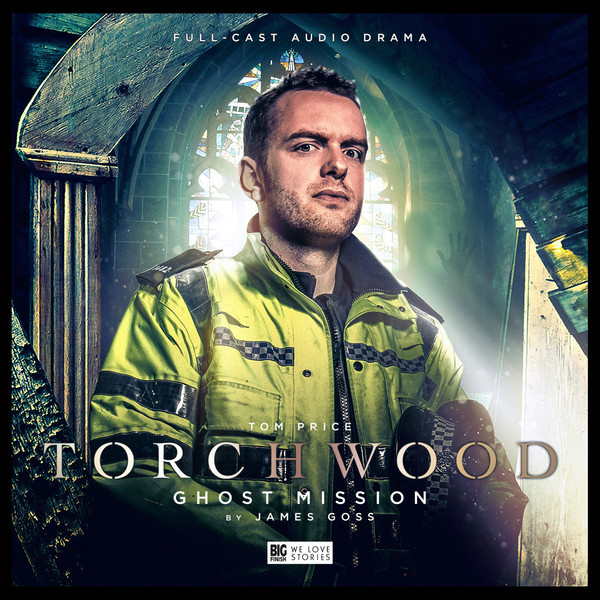
Reviews Torchwood 2.3 - Ghost Mission by Tony J Fyler


‘Never underestimate a Welshman’s overconfidence when faced with a simple set of instructions.’ Sergeant Andy Davidson.

Tony hears dead people.

Capsule Review: Oh hell yes.

Rucksack Review: After faffing about with strongly-accented Russians, Torchwood goes back to its roots and rips the roof off with dark funnies.

Fully unpacked and made-up flat-pack review: Have you ever had the sensation that someone else is living your life? The life you were ‘supposed’ to have? Ever had the feeling that you missed your single window to be special, and brilliant, and somehow very important, and instead you’ve ended up being just…you?

Welcome to the life of PC, now Sergeant Andy Davidson. He’s a ‘nice bloke,’ with a good friend who saves the world from aliens. They had similar assessment scores, similar careers, similar instincts – but then, one day, Gwen Cooper stumbled onto something that led her into Torchwood, and Andy Davidson didn’t.

Ten years later, Gwen’s still saving the world, and Andy’s still…not.

Until now.

The Torchwood audios have run the gamut of the TV show’s many styles, and added a whole glorious element of their own – the out-and-out funfest that turns out to have serious undertones or underpinnings. We’re talking about episodes like Ianto Jones’ plummet to earth while on an insurance telesales call, Fall To Earth, and Yvonne Hartman’s night out in Cardiff, One Rule. If you enjoyed either of those, Sergeant Andy’s exploits when a Torchwood assessor from 1953 offers him the chance to try out for the team is absolutely for you. Like One Rule, it’s hugely Welsh, and probably if you’re familiar with the South Welsh mindset it’s more funny than if you’re not, but there’s much more to it that in-jokes for Welsh people. In the TV show, Andy Davidson was frequently used for comedy relief, but this story takes you much further into the reality of the man – and shows how Andy would deal with the weirdness with which Torchwood deals on a daily basis. To some extent, ten years on, Andy remains how Gwen began – resourceful, enterprising, but very much everyman, the typical listener’s window to a very unorthodox world, so yes, he gibbers and panics a bit as Norton Folgate, Torchwood assessor and soft-light projection, takes him through a situation that would be typical for Torchwood. But this story from James Goss shows us Andy in more detail, delivering a fast, fun, punchy hour of sort-of Torchwood with more purpose than you initially guess at. Yes, just like the previous release, Zone 10, this one manages to work in an evolution of the whole Torchwood Vs The Committee story – in fact, ultimately, the two are quite closely connected, inasmuch as the evolutionary elements delivered in Zone 10 show up in far more concrete ways here, and there are callbacks too to Forgotten Lives, one of the darkest and most creepy Torchwood Audios to date.

Does Ghost Mission bring the scares? Wellll, not as much as some others, certainly, but the dangers are certainly real – Andy’s threatened by alien mimicky soup, dangled from rooftops, trapped in confined spaces, drowned, probed, cloned, threatened by a choir of actual ghosts and chased by a giant roaring monster, as well as meeting a bunch of creepy old people who smell of wee, as well as facing the potential humiliation of asking out a pretty girl in a café. But Andy Davidson is really Gwen Cooper without the decade of hard decisions and heartbreaking choices. He’s bright, he’s funny, and he’s really more intelligent than the TV Torchwood would necessarily let you know.

‘Well, shift your arse, Professor Quatermass!’

Tom Price rises magnificently to the challenges of Goss’ script, bringing Andy Davidson to a new kind of life with all the complexity, intelligence and colour that the audio medium gives the scope to deliver. Certainly, if he was auditioning for future Andy Davidson adventures, he knocks it out of the park – more than some of the Torchwood regulars, Andy gives us an easy, accessible window into the world of alien gittery, by virtue of being as-yet-unhardened by the everyday battle. 

‘You are being so Torchwood right now. There’s no conspiracy. This is not the Moon landings. This is a bloke from Barry, probably called Barry, having a go and cocking it up.’

Samuel Barnett as Norton Folgate is an utter joy, the writing by Goss dripping in 1950s ballsy camp and Polari (the dialect used by gay men when being gay was a prosecuted crime in Britain), and Barnett delivering characterization by the bucketload – often irritating by virtue of his camp chirpiness, he’s the Hopkirk to Andy’s Randall, forcing him on to solve puzzle after puzzle, giving just enough of himself back to keep Andy interested, and pushing him on from a puddle of grocery-dissolving goo, to a facility full of vats (Vats, apparently, are never good. Ever), to a rooftop, to the most haunted church in Cardiff and the MacGuffin which pushes the Torchwood-Committee dynamic. Barnett and Goss together create a character in Folgate of which we could enjoyably hear far more (and apparently will do, according to the extras).

While Ghost Mission is very much in the vein of these new extra-comedic Torchwood episodes like Fall To Earth and One Rule, there’s a compelling story here in both ‘battling aliens’ terms, ‘ongoing story-arc’ terms and most importantly in human, character-driven terms, with the humour of Andy’s unTorchwood reactions giving it a unique, bright breath of air most similar so far to More Than This (in which Gwen Cooper takes a local civil servant to work with her). So while there’s lots of character comedy here, there’s that dramatic underpinning that makes it much more than a throwaway hour of knockabout fun with the Torchwood wannabe.

If you like your Torchwood shocking and jump-out-of-your-skin scary, you’ll be less impressed with Ghost Mission. But the actual vibe of Torchwood was more often mysterious with a ghastly dark twist than it was out-and-out scary, and if you like that kind of thing, there’s plenty to love about Ghost Mission. If you’ve been enjoying the funnier stories too, Ghost Mission is a fabulous banquet. And if you like going beneath the skin of frequently underused characters, Ghost Mission will give you a gorgeous hour of pure pleasure.

Get to know Sergeant Andy Davidson better – he’s more than a nice bloke, after all.