Showing posts with label Tony J Fyler. Show all posts

Sunday, 11 July 2021

Articles Issue 93 - Our Last Issue - Everything Changes


Issue 93

Contents Guide

 Articles

Everything Changes – Our Last Editor’s Note

https://projecttorchwood.blogspot.com/2021/07/articles-everything-changes-extended.html

Interviews

The David Richardson Interview

https://projecttorchwood.blogspot.com/2021/07/interviews-david-richardson-interview.html

by Tony J Fyler

 Torchwood Reviews

The Five People You Kill in Middlesborough

https://projecttorchwood.blogspot.com/2021/07/reviews-five-people-you-kill-in.html

By Tony J Fyler

 Who Reviews

A Town Called Mercy

https://projecttorchwood.blogspot.com/2021/07/who-reviews-town-called-mercy-by-matt.html

Bad Wolf/Parting of the Ways

https://projecttorchwood.blogspot.com/2021/07/who-reviews-bad-wolf-parting-of-ways-by.html

 By Matthew Rabjohns

Rise of the Cybermen/Age of Steel

https://projecttorchwood.blogspot.com/2021/07/who-reviews-rise-of-cybermen-and-age-of.html

The Beast Below

https://projecttorchwood.blogspot.com/2021/07/who-reviews-beast-below-by-tony-j-fyler.html

Victory of the Daleks

https://projecttorchwood.blogspot.com/2021/07/who-reviews-victory-of-daleks-by-tony-j.html

By Tony J Fyler

Interviews The David Richardson Interview with Tony Fyler


Expanding Fictional Universes into Audio. 

Big Finish Productions has long been a prime player in expanding the universes of Doctor Who, Torchwood, and a whole range of other shows in audio drama. Tony Fyler spoke to the company’s Senior Producer, David Richardson, about what it takes to successfully expand those worlds. 

Where does the spark come from in terms of expanding a TV universe into audio? Are you always looking for places in the story where expansions could happen? Places where expansions could be profitable? Or is it usually a case of “I would really like to hear what happened to…”? 

David: I’d say, without exception, the spark always comes from the original TV episodes. The characters that have been given their own spin-off ranges have earned them because their TV stories suggested a life before the Doctor arrived, and also suggested they have a life after he left. 

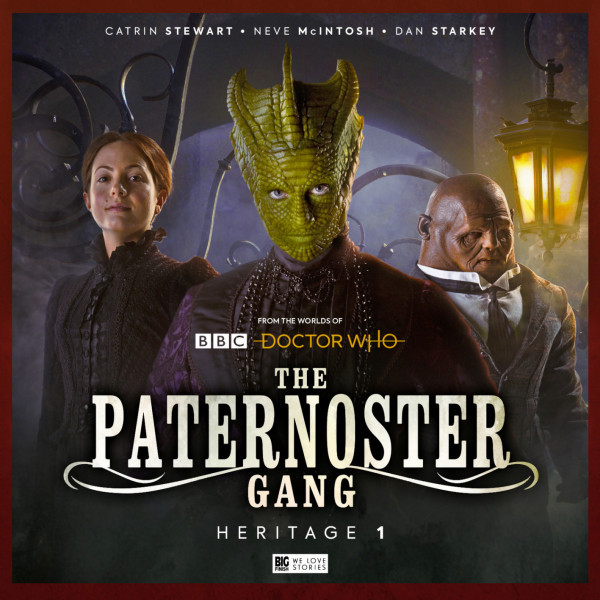
That’s true of Jago and Litefoot, and the Counter-Measures team, and also Lady Christina and The Paternoster Gang. I have to say we never, ever start with a conversation that goes ‘What can we do that will make lots of money?’ I can’t recall a single pitch that started that way. It always begins with excitement, the chat about ‘We’ve got this idea and it’s really got us excited’. We’re fans of Doctor Who and Torchwood ourselves, so if it’s an idea that turns our heads, that gets us excited, then that’s usually a good sign. 

In a business where creativity and profitability both have their place, where’s the breakdown for you, and which is the leader – the satisfaction of creativity or the knowledge that an expansion of a universe will sell (while of course making loads of fans happy!)? 

David: Every series must pay for itself - absolutely it must cover its costs, and earn its place in the catalogue. But we are firm believers that creativity brings success - that quality work will find an audience. Over the 14 years that I’ve been working here, whenever we announce a spin-off there’s always someone on social media who sighs and says ‘A spin-off too far’. 

I saw it levelled against Jago and Litefoot all those years ago, and that series has become one of our most enduring hits! I’m not convinced there is such a thing as a spin-off too far in this modern age of multiple series linked storytelling. Story, characters, dialogue rule - that’s what matters. 

What’s your favourite expansion of a universe Big Finish has done so far? What makes them your favourite? 

David: As Nicholas Courtney used to say, ‘The one I’m working with at the time.’ I always thought he was being diplomatic but actually, I can see that, as you gravitate from one series or group of actors to another, at that moment they become your favourite. But I do have a very powerful affection for Jago and Litefoot, because the pairing of Trevor Baxter and Christopher Benjamin was just beautiful. Every day working with them was a day well spent - we just laughed, all the time. We got the work done, and the recordings were brilliant, but every moment between every take was just filled with banter and kind spirits and joy. I sit here talking about it with a smile on my face and tears welling in my eyes - I was just so lucky to be a part of it. 


Without necessarily giving away spoilers (though you should naturally feel entirely free if you like…), is there a universe you haven’t got to expand yet, but really hope to in the future? Do you have a list, and if so, what’s on it that you can safely tell us about? 

David: There are always ideas, things I’ve got on my list of things I’d love to do - and I know a lot of the other producers feel the same. Scott Handcock has pitched some smashing, exciting things which I hope one day might happen - they’re a series I would love to just sit and listen to myself. So I can’t give more details, but there are always ideas floating around. 

What’s the process like between having an idea for a new universe expansion and getting it into studio? Do you commission writers to write scripts on spec if you either need to acquire the rights or persuade key actors? Or is the legal side all nailed in place before the writers start writing? 

David: The process pretty much follows this pattern:
1: You have the idea, which the producer discusses with the script editor, and it’s written into a pitch.
2: That pitch is presented to Jason Haigh-Ellery and Nick Briggs. If they like it, then it’s green lit and a budget is agreed.
3: The producer and the script editor then discuss writers, who are given a brief (which can sometimes be quite prescriptive) and asked to pitch story ideas.
4: Story ideas, once agreed with the producer and script editor, then go to Nick Briggs for his comments and can be reworked from there. They then go to the BBC for approval. Once everything is signed off, we start working on scripts.
 

Thinking in particular of things like the Ninth Doctor Adventures – Christopher Eccleston’s always been an actor motivated by great scriptwriting (and has mentioned Nick Briggs’ writing as a big draw), so were there scripts in place before he signed on to the project, or did you need to convince him on board and then knock his socks off with scripts?

David: Conversations with Chris were ongoing for some time, and we did reach a stage where he asked to see a script. Nick wrote some example pages, which if I recall rightly were the first 40 pages or so of Ravagers, episode one. 


Chris loved it, and we were away.

Hand on heart, I have absolutely loved working with Chris. I’m just so blown away by his energy and passion for what he does - and the kindness with which he treats those around him. Those 12 recording days were some of the happiest, and he threw himself into every script and was always, always full of praise for the efforts of our writing team. 

Similarly, when getting the daughters of famous companion actresses on board (Sadie Miller, Daisy Ashford, etc), do you get scripts written to persuade them in, or does Big Finish’s reputation do a lot of that work for you?


David: We didn’t present scripts to Sadie and Daisy - but they have worked with us before in other roles, so knew Big Finish and the people well. It was a difficult decision to recast those roles, made easy when Sadie and Daisy came on board. 


You have quite a pool of familiar writers you know can deliver at Big Finish, but you’re also frequently bringing in new talents. At what point do names get attached to stories? Is it a case of “I’d really like to hear a River Song story written by [to pick a name at random] Lizbeth Myles, or a Lady Christina story by Sarah Grochala,” or do you get as far as outlines and briefs before thinking of who could do interesting things with them?

David: It’s usually down to availability. People get busy. I mean, I want to work with Lisa McMullin on EVERYTHING, but her TV career is really taking off, and there are only so many scripts she can take on. The same goes across the board. Obviously, some writers are a better fit for some series - writers with great comedy talents are a natural for Missy; writers with strong dramatic flair fit well into Stranded. But there’s huge crossover as well. Someone like Roy Gill can really do anything you throw at him. We’re lucky to have them all. 

Is there ever a set-in-stone idea of what you want to achieve from a universe expansion, beyond the telling of good stories, or is that the be-all and the end-all – to tell good stories with the particular characters you’re expanding? After all, Big Finish is credited with ‘rehabilitating’ the Sixth Doctor after his on-screen mellowing wasn’t given the time to mature. Is that sort of thing part of the goal for some ranges – to broaden people’s perception of characters over time – or is it more a case of plotting out the arc of three or four boxsets in a range at a time and seeing the journey on which they take you before deciding what’s next for the characters? 

David: I don’t think that our agenda is that set-in-stone. We work ahead a bit - for example, I was pitching the story world for Stranded when we were about halfway through the previous Eighth Doctor series, Ravenous. We needed to know where we were going. But it’s always down to telling good stories, and being in an interesting storytelling world. 


And you never know if people are going to buy into it. The basic idea with Stranded was to start with Doctor Who with much of what makes the series Doctor Who taken out. It was my idea, and then I spent months in turmoil because I was terrified people might not buy into that. And yet it became a huge hit, because it was something different. And we got an Audie Award for it - a massively prestigious award. But it had great scripts and such an amazing cast - how could it fail? 

What excites you most about starting a new universe expansion?

David: Those first few weeks, when you are all throwing ideas around and all the creative voices in the team add into the mix, and it snowballs into something wonderful… that’s just so brilliant. I’m a great believer in team working. Everyone should have a voice.

For example, on The Paternoster Gang, I know the three leads are really invested in it and have their own ideas, so every series starts with a meeting where Neve, Catrin and Dan throw ideas out there. And lots of them get used - it’s a really rewarding process.


Forgive me this one – my writing pals at Project Torchwood wanted me to ask “How do you get such great writers all the time?” and also “Is there ever any chance of fan writers working for Big Finish?” – which I think means besides the Paul Spragg competition, is there a potential pathway for ‘fan’ writers to becoming Big Finish writers? 

And also, I guess, how does it work in terms of writers for particular universes? Are there writers that you instantly know you can go to for, say, a Third Doctor story that will take that range forward, or writers who can always be relied on to turn out a cracking Torchwood? Any strict rhyme or reason, or, as you have a good range of writers at your disposal, does it come down to an instinct of who will do well within a particular universe, or with a particular story brief?

David: It’s a good question. We have an ongoing dilemma in that we always need new writers because we’re so busy, but because we’re so busy we have limited time to develop new writers. And ‘develop’ is the key word here - all scripts can go through many rewrites and changes and tweaks, which is a time-consuming process and the writers work closely with our brilliant script editors. 

So someone relatively new to the audio writing can take a lot of the script editor’s time. So we have to limit the intake of fresh writing talent - and we seek that out ourselves. We just don’t have the infrastructure in place to have a formal free submissions system.

The best tip for anyone who wants to write Doctor Who is to keep writing and writing and writing. 


And I think the best Doctor Who writers don’t just want to write Doctor Who - they want to write all sorts of things, but Doctor Who is an important part of that. Get as much experience and set your sights as wide as you can. It’s a big audio industry out there, and there’s a lot to learn. 

Are there any universe expansions that are now officially never coming back? Any more Jenny on the way?* Second set of New Earth stories? Dan Dare? Similarly, any one-offs possibly in mind for future series? Shilling and Sixpence or the like? I’m guessing any plans for future Lives of Captain Jack releases are pretty much in abeyance right now? 

(*We asked, just before a second set of Jenny adventures was announced(!)) 

David: I mean, Jago and Litefoot is now sadly over, because we lost dear Trevor Baxter. We reached a very good ending with Counter-Measures, and my feeling at the minute is I’d hate to undermine that ending by making more. But never say never. 

With Big Finish being the biggest player in the expanded universe of quite a few fandoms now, and with so many projects and universes on the go at different stages at any given time, is it ever tough to keep up with where each universe is in its story when you’re building the next instalment for it?

David: Not really - I just ask Matt Fitton! The man is a Big Finish encyclopaedia! 

What are the biggest challenges you face when expanding a universe? How you decide on a tone that takes a universe forward, while still being recognisably similar to what the fans have loved about a universe before?

David: I’m not sure that retaining the tone is a challenge, really - that’s part of the joy of it. Finding the authenticity in any range is in our DNA - it’s what drives us. I’d say the biggest challenge for me is always confronting my own nerves - just making sure that everyone has a good time, because that then infuses the production. 

If I’m working with Alex Kingston for the first time, say, I want her to have such a great time that she will come back for more. When Christopher Eccleston steps through the door, I want him to feel ‘Hey, this is a lot of fun.’ Those are the things I worry about - the people. 

This one’s not a question, just an opportunity taken to say thank you, for all the universes that have improved fans lives – my life – immeasurably. I first came into Big Finish fandom by ‘taking a chance’ on Spare Parts (nothing like coming in on a high!). It’s been brilliant so far, and I’ve no doubt it will continue expanding universes – and minds – for decades to come. Thanks, David – and thanks to all who make it happen.

David: Ah, that’s lovely - thanks so much. Seriously, we’re so lucky to do what we do. And I’m so grateful to Nick Briggs who plucked me out of an unhappy job 14 years ago and offered me this role at Big Finish. We really make a lot of this stuff for ourselves and hope that other people like it - so the fact you do means a lot!

Reviews The Five People You Kill in Middlesbrough by Tony J Fyler


Tony’s…not going to Middlesbrough. 

Spoiler: if you’re a fan of Doctor Who or Torchwood who complains that the show is too busy pushing a woke agenda, and that you don’t like it when it gets all political – switch off this audio immediately. It’s not for you. 

But then, if you’re one of those fans, Doctor Who since practically the dawn of Jon Pertwee hasn’t been for you, so how you’re still here is a mystery. 

But this Torchwood story, more than most Doctor Who or Torchwood, is in your face political. 

It’s also in your face relevant, with a staggeringly incompetent government and a cloud of death that can kill on contact (in this case, the result of a crashed spaceship in Middlesbrough, rather than, say, a pandemic virus). Also in this audio, a dithering, worse-than-useless Leader of the Opposition, too terrified to annoy anyone to actually do anything (though with an unfortunate tendency to find themselves accidentally supporting extreme right-wing events with gifts of jam (ahem!). The operator of a billion-pound health app that doesn’t actually work? Yep, she’s here too. A government spin doctor who breaks the rules he himself sets (complete with mention of getting his eyes tested)? Check. Demented radio ‘truther’ who believes in the New World Order of ‘banking powers’ being behind all the ‘lies’ about a Middlesbrough incident? Yep, we have one of those too. 

The Five People You Kill In Middlesbrough is a phenomenally brave Torchwood story to release in the current climate. But if for instance you’re a fan of verifiable reality and virology, and not a fan of political idiocy, chicanery, and apathy, conspiracy theories, antisemitism or the staggering human gullibility that has cost huge numbers of lives in our real world, you’ll probably love it. 

I absolutely love it. Which tells you where I stand on a whole lot of issues. 

The weird thing about this release, if anything, is that it exists at all. Pitching Yvonne Hartman against more or less the whole modern British world takes her beyond any prior Torchwood world or timeline – even the world of the ‘New Torchwood’ box sets, Aliens Among Us and God Among Us. Trying to fit it into any real Torchwood chronology is probably a mistake. It’s more or less an unashamed cri de coeur on behalf of the rational in an increasingly insane world, and an example of what someone who had the power and opportunity of Torchwood behind them could do if they existed in our world and had frankly had enough of it all. 

Another slightly odd note of course is that Yvonne Hartman in TV Torchwood – and largely in the subsequent audios – has some practically 19th century views on ‘making Britain great again,’ and cares for ‘the people’ in a more or less abstract, ‘they should be protected for now, if all else fails’ way, rather than with any particular warmth or emotional engagement. 

But there is of course one thing that absolutely gets Yvonne Hartman’s goat, and that’s inefficiency. Throughout The Five People You Kill In Middlesbrough, she advocates tirelessly for a simple solution. The so-called Icarus Protocol – nice work in the naming department, there – would prevent any alien devastation from, say, a crashed spaceship – from affecting (or indeed, infecting) anywhere else beyond a given boundary. But the Secretary of State for Defence, Alfie Scott (Tim Bentinck giving us his ‘bluff northerner’ – in a performance very close to his ‘Tommy’ of Torchwood One, again suggesting Middlesbrough is not to be taken as part of any previous Torchwood chronology) has ‘received other science, and we’re following that science’- which amounts to little more than building a ring road. Even when it emerges that the Defence Secretary’s other pet project, a missile program, may have been responsible for shooting down the ship that devastated Middlesbrough in the first place, and that the ambassador of the aliens in question has a plan that could easily undo the devastating damage of the crash, Yvonne can’t make those in government listen to her, can’t make them give enough of a toss about human beings to put aside their self-interest. 

When it comes to cordoning off the rest of the country and the world from the disaster hotspot, she runs into crisis manager Mo Simister (Sara Powell), who costs the public billions of poundsworth of tax revenue for a particle tracking phone app that simply doesn’t and never could work, and who pays a specialist in red carpets to establish a cordon. With her, it’s not that Yvonne gets further, particularly, but she does plague the ever-living daylights out of her, using Torchwood tech to try and make Mo see sense. 

We won’t spoiler you with the details of whether she succeeds. We’ll just refer you back to the title of the release… 

With short-sighted political guru Caspar Beacham (only the actual Dennis Law, popping his Big Finish cherry, and appearing to have a good deal of fun doing everything but driving to Barnard Castle), Yvonne is more fundamentalist, essentially tricking him into breaking his own rules in full view of the public, and letting the world’s media know that people should evacuate from London in a big hurry, because after all, when the rats are leaving, it’s time to pack a bag and drive into gridlock. 

And with Lancelyn Green, the ‘banking interests’ truther who describes himself as ‘The Lance Of Truth,’ we get the only real hint that The Five People You Kill In Middlesbrough fits into any kind of Torchwood chronology, because Yvonne uses a piece of alien tech that is the subject of a previous release, The Crown, by Jonathan Barnes. 

Without spoiling it for you if you haven’t heard it yet, it’s an interesting dip-back into previous Torchwood audio, and ultimately, if it existed, it would be too tempting to use on fact-averse, fact-perverse bloviating spokespeople for the absurd, because if you argue with them, you just become ‘part of the plot,’ and their audience believe everything they say – to the collective harm of the whole society. The Torchwood solution is intensely cruel – but also more effective than anything available to us in the real world. 

Sure, Yvonne’s way impacts the whole ‘freedom of speech’ thing, but she’s convinced it’s for the betterment of society as a whole after some of Lance’s listeners die, marching confidently into the cloud of Middlesbrough-death because they believe his proclamations that the Middlesbrough crash is a hoax designed to keep people controlled. 

Overall, The Five People You Kill In Middlesbrough will be a cathartic experience for lots of people frustrated by the catastrophic, deadly folly of some leading western governments. If, like many people, you’re convinced that there are bacteria in a deep ocean trench that could handle a national or international disaster better than the government you have, you’ll find yourself identifying with Yvonne’s frustration as she comes up against ineptitude, self-interest, graft, lies, idiocy and utter contempt for human life. 

For anyone who thinks science-fiction shouldn’t come close to real-world politics – less cathartic, more irritating. That’s probably a criticism Big Finish is anticipating, because the piece itself is said to be written by… Yvonne Hartman. Mm-hmm. 

In which case, all hail, Ms Hartman. You did your duty, for queen, country, and rationality.

Sure, a handful of people had to die. The world kinda got better as a result though, so, no harm, no foul, just possibly the best Big Finish of 2021 so far. There’s been some absolutely breath-taking drama from Big Finish in 2021 of course, but if you need the kind of catharsis of a world-class truth-telling stand-up comedian to shake out some of your fury at the world in which we live, The Five People You Kill In Middlesbrough is going to ring every bell you have.

Who Reviews Rise of the Cybermen and the Age of Steel by Tony J Fyler


Tony’s getting the upgrade. 

When Doctor Who came back in 2005, it was keen to redevelop what had long been the show’s #1 monster in the public imagination – the Dalek – and make it a genuinely scary threat for the 21st century. 

When the show got its second series confirmed, and with a brand new Doctor in David Tennant, it couldn’t really avoid bringing back the Cybermen (often thought of as the show’s #2 monster), and re-imagining them for the 21st century too. 

But there was a line to be walked. With the Daleks, they were so very vivid in the general public consciousness that what you needed to do was address their perceived weaknesses – the inability to deal with stairs, their sink-plunger arm, etc – and turn them into strengths, to make the Skarosian tank-mutants into unstoppable killing machines again, and elevate them to such a position that they and the Time Lords had essentially wiped each other out, leaving only the Doctor in the universe who could stand up to them when they returned. 

With the Cybermen, there was a different problem. It wasn’t that the public was mostly aware of their weaknesses, but that they weren’t particularly aware of what made the Cybermen tick, where they were from, what made them want to convert or conquer the universe. 

So what you needed for the first Cyber-story of the 21st century, was essentially an origin story that people could get hold of. 

Hardcore fans of course, knew the origin story. The people of Mondas, Earth’s original twin planet, had perfected cyber-surgery, replacing the organic parts of themselves over time, and eventually removing their capacity for emotions, leaving them entirely logical and bent on spreading the gift of Cyberization to the rest of the universe. 

That’s where the second balancing act came in. Without essentially re-telling The Tenth Planet with the Tenth Doctor, how did you give the Cybermen a backstory that new viewers could connect to, without ruining the ‘canon’ for the established fans by essentially retconning The Tenth Planet? 

The solution from writer Tom MacRae was more than a touch ingenious. In ‘our’ universe, Mondas was a twin planet of Earth. But perhaps in a parallel universe, it was right here on Earth that the Cybermen developed. A twin dimension, rather than a twin planet. And Rise of the Cybermen and The Age Of Steel was off to the races. 

There’s always talk of the similarities between Rise of the Cybermen and Spare Parts, the Big Finish story by Marc Platt which takes the Fifth Doctor to Mondas as the Cybermen are actually beginning to emerge as an entity, rather than a collection of upgrades. But MacRae rightly draws lines of separation between Platt’s masterpiece (Seriously, if you’ve never heard it, go now and listen, it’s absurdly good) and his own. Yes, technically, they document the same point in the evolution of the Cybermen – but that’s about all they have in common. 

For a large part of Rise of the Cybermen, in fact, we’re distracted by the potential of a parallel universe when the Doctor, Rose and Mickey more or less fall into one. While the only energy source that can recharge the Tardis is growing and getting power, the potential of that other universe is too strong for the two companions – Mickey goes to see if his nan, who raised him, is still alive there, given she had died in ‘our’ world, and Rose is brought up short by a billboard that shows her dad, dead in our universe, is not only alive in the parallel, but successful. 

In the parallel world, Jackie and Pete Tyler are still married, but they never had Rose. And Pete is connected to the activities of a mega-businessman called John Lumic. 

Lumic, we learn early, is dependent on a wheelchair and life-support systems, making him very much a re-envisaging of Davros, creator of the Daleks. But the interesting thing is that it technically makes more sense in Lumic’s case that a man who feels himself to be an almighty brain and will, almost mocked by a body decaying with age and atrophy, would focus on creating something like the Cybermen. While he wants to wait until the last possible moment, the Cybermen for him are a kind of fantasy wish-fulfilment, an immortal, undecaying body to carry around the human brain. The Cybermen have always been the ultimate fantasy of the old and the fearful – they’re a protection both from the physical decay of ageing and death, and from the mental pain of living a life with a brain that still thinks organic thoughts in a body no longer able to experience mortal pleasures in any meaningful way. 

The Cybermen have always represented this fear, but it has never been centred in a single individual’s drive to survive until the world met John Lumic (Roger Lloyd-Pack) in Rise of the Cybermen. 

At first experimenting with society’s unwanted, the homeless and hungry (literally the spare parts of the social pecking order), the Cybermen grow in number – though it’s worth pointing out that this gradual rise is somewhat counterintuitive at the end of the story, when it turns out Lumic has had hives of Cybermen stashed away for quite some time). Weirdly though, it’s almost coincidence that brings Rose and the Doctor to Pete and Jackie’s house the night they’re hosting the President of the UK. With whom, Lumic’s toy soldiers want a word. 

Graeme Harper was the only Classic Who director to get to direct in the New Who era too at the time, and what he gave us in The Rise of the Cybermen was a masterclass in angles and the delivery of menace through the choice of shots. He made the return of the Cybermen into something that had both power and a sense of size that was frightening as they crashed Jackie Tyler’s birthday party with mayhem on their minds. 

It’s possible to argue though that the new Cybermen lost some of their Classic era menace specifically in Rise of the Cybermen/The Age Of Steel, by virtue of having no weapon except a kind of electro-touch. They also gained an unfortunately undramatic catchphrase to mimic the Daleks – intoning “Delete, delete, delete” like walking incarnations of Grammarly. And for any long-term Cyber-fan, the question of how they would sound was a vexed one – the Cybermen have had a range of vocal tones throughout their on-screen lives, but for many people the best (if least logical) was that of the Eighties Cybermen voiced (and played) by David Banks and Mark Hardy, which had a deep electronic burr to it. Nick Briggs is a master in almost all things, but the monotone he gave the new Cyber-voices, while logically in keeping with the like of Troughton-era Cybermen, felt a bit flat on screen. 

But for most viewers, that didn’t matter. Either the Cybermen were back, and looking bigger and stronger then ever if you were a hardcore Who-fan, or there was a new cool monster in Doctor Who if you weren’t. 

One of the neatest elements about the Rise of the Cybermen and The Age of Steel is how plausible the creep of Cyber-technology is in it – people at first getting ‘earpods’ which feed chosen content directly into their ear canals and brains, and from there, the information-flow going both ways, facilitating mind-reading and mind-control as and when necessary. The Doctor’s lecture about the human race always needing the next upgrade was well observed based on a society in which technology is outdated within two years of its launch. And the universality of Lumic’s ‘earpod’ technology gets lots of people walking into Battersea Power Station early in The Age Of Steel, because if the Cybermen have always been about the fear of ageing and death, they’ve also always been about the body horror or a human brain in a metal body, the flesh having been cut away and discarded. 

The second episode of the Cyber-return to Doctor Who riffed heavily on this body horror and the emotional response to it. Where in Classic Who it was rarely made explicit how the emotions were removed, in The Age Of Steel it was given a conveniently vulnerable explanation. There was no Frankensteinian lobotomy action involved in creating a Cyberman, there was simply an emotional inhibitor, which, if you knew how, could be switched off. That would mean lots of Cybermen suddenly becoming self-aware inside their metal bodies and going stark, raving bonkers. 

The Doctor only discovers this through Mickey and his connection to a gang of anti-Lumic activists, the Preachers, who in this universe have a Ricky Smith among their number. Ricky is sadly killed along the way, giving Mickey an example to look up to (as well as a potential boyfriend in fellow Preacher, Jake). When Mrs Moore, a techie in the gang, teams up with the Doctor, there’s a touching scene where a dying Cyberman regains its humanity, and tells them it was getting married the next day. And while Mrs Moore too immediately pays the price, and the parallel Jackie Tyler is among the first batch of humans to be Cyber-converted at Battersea, the Doctor learns the way to defeat the Cybermen – find the code that controls the emotional inhibitor and broadcast it to all the Cybermen. 

This is both in the long tradition of Cyberman stories and yet somehow disappointing at the same time. While the Daleks have had issues that make them weak – stairs, plungers, etc – the list of things that, for no good reason whatsoever, allow you to destroy a lot of Cybermen in one go had grown ludicrous in Classic Who – from radiation to gravity to nail varnish remover to gold coins lodged in their chest. They have always had to be artificially limited in their power, and the emotional inhibitor, while it was a slightly more technical version of the trope, was the first 21st century way to kill a lot of Cybermen in a hurry and so resolve a story. It was a trend which would probably reach its nadir in the Eleventh Doctor story Closing Time, when for all intents and purposes, ‘blowing them up with love’ became a thing you could do to Cybermen. 

While the ending is too easy, it leaves a lot of changes in the world of the Tardis crew. Rose reveals her identity to Pete Tyler, and he can’t especially handle it – especially not after losing his wife in the Cyber-factories. 

Mickey, meanwhile, decides to stay behind in the parallel universe and root out all the hives of hidden Cybermen, while also having some extra time with his nan. As he rightly says, in a world with Rose Tyler and the Doctor in it, “It’s never gonna be me, is it?”, so he decides to find his own destiny, free from the endless, hopeless hope of getting back a relationship with Rose. 

Rise of the Cybermen and the Age of Steel together are a fantastic spectacle of Cyber-reinvention, and they repay re-watching even today. The way the Cybermen are defeated may be little more than the 21st century of the Classic show’s easy solutions to Cybermen, downgrading them as a threat, but the two-part reintroduction of Doctor Who’s silver medal monsters has a high bodycount, Cybermen marching en masse, a joyfully explicit explanation of how they came about (in at least one reality), and plenty of personal, emotional impact, both for the Tardis team and for us as viewers. This is an achievement underlined by quite how difficult it has proved to deliver an effective Cyber-story in the years that have followed. Rise of the Cybermen and The Age of Steel – check them out again. 

They’re probably better than you remember.

Who Reviews The Beast Below by Tony J Fyler


Tony gets beastly. 

Of all the stories he ever wrote for Doctor Who, when asked if there was one he was least pleased with, Steven Moffat chose The Beast Below as an example of one that didn’t really work. 

It’s distinctly arguable he was a touch too hard on himself. There’s at least one element that’s patently absurd, certainly, but there’s a great deal to enjoy and admire about the Eleventh Doctor’s second story, and Amy Pond’s first real foray into the universe. 

First of all, like Wendy in Peter Pan, she follows her enigmatic friend into the wider universe dressed in her nightie – a first for Doctor Who companions (assuming Leela’s leather gear wasn’t used night and day), which makes her appeal to us immediately as a trusting ‘fan’ of her ‘Raggedy’ ‘imaginary friend. 

The story itself has some joy in its logic – and some human darkness too, to balance it. The idea that the human race, faced with extinction, got itself into a series of star arks, leaving only the UK (sans Scotland) unprepared, feels oddly resonant, somehow. The idea that decisions would be taken which go against everything in people’s natures, decisions that hurt a harmless, helpful creature, and cause people to regularly self-anaesthetise with forgetfulness – it’s darker than you might remember, The Beast Below. 

It’s also something of a triumph for Matt Smith’s new incarnation. Fresh from his regeneration story, he owns The Beast Below, from his bandy-legged Chaplin walk to his mysterious ‘Doing Of The Thing’ with the water glasses to discover a lack of engine vibration, his aching understanding of a child crying silently because no-one listens, his sliiiightly cringy self-definition as one who resists every chance they get, to his absolutely blow-the-doors-off sudden rage, declaring “Nobody HUMAN has anything to say to me today!” 

If you didn’t quite get the chills of New Doctor love from The Eleventh Hour – we’re not sure why you wouldn’t, but just say you didn’t – there is plenty in The Beast Below to make you love this quirky, funny, compassionate, old man, young body incarnation. The moment when he lets everyone hear the screaming of the star whale has resonances of the Tenth Doctor in Planet of the Ood, but it’s handled in a way that makes you somehow certain this is a very different Time Lord. It’s more an accusation here than it is an act of compassion or sharing, and you get a sense that while the Tenth Doctor was always giving people or menaces the option to turn away from their intent, this Doctor, when angered, might very well bring the roof crashing down on your head, and warnings be damned. 

Now, is it true that ultimately, it takes Amy pond’s faith in him to sway him from a ghastly course of non-Doctor action? Absolutely, but back then, they were both new and it felt like a pleasing balancing act – the new young companion challenging the old new Doctor into thinking bigger, and better, and more Doctor than the horrible options in front of him. 

Ironically of course, this is exactly the idea that Steven Moffatt would recycle in The Day of the Doctor, with Clara Oswald making three Doctors better than the options available. Here it feels smaller and sweeter, and somehow more resonant because it feels more every day. Amy Pond saving the Doctor from the box in which he’s thinking? Oh yes, we’ll have some of that, the companion showing her worth and her mettle early in her travelling time – great. 

There are other elements that work well, too – the idea of a Queen going under cover in her own realm is elegant, the heartbreaking pathos that it’s a scenario that’s been played out time and time and time again, her mask never changing because her lifespan has been artificially expanded and slowed. It all makes a kind of horrible, beautiful science-fiction fairytale sense, like Sleeping Beauty who every now and then re-sentences herself to ignorance and sleep, because knowledge while awake is too hard to bear. 

Creepy-seeming tentancles breaking through into the streets, undignified Geronimo-ing into the mouth of a giant star whale, and a subsequent hurl escape are all great fun, but fun with a dark tinge, revealing as they do another layer of the lies on which Starship UK is built. 

Sophie Okonedo as Liz 10 adds power and pathos in just the right amount to a story that needs them to bring the science-fiction elements and the human elements together, focusing the degree to which people will forget the suffering of their fellow creatures as the price of their own life. She also brings a glorious swish of style to the role, with her delivery of lines like “I’m the bloody Queen, mate.” Terence ‘Demon Headmaster’ Hardiman is a quiet, enigmatic force as Hawthorne too, never overshadowing the drama or its more dynamic players, but exemplifying the kind of public servant who would, for instance, efficiently feed people to the lions if their emperor commanded it. It all works extremely well to create a world weighed down with secrets and sadness, that needs a release no-one’s strong enough to give it. 

So, what doesn’t work? 

Annoyingly, it’s the Smilers and the Winders. A neat idea in themselves, creatures with revolving heads that change their face from benign to horrifying when they turn, there’s almost literally no purpose for them in the script except to force a couple of chase sequences and scare the toddlers. 

When we find out the truth about the Winders – the humans with Smiler faces on the back of their heads – the sense of the thing goes completely out of the window, forcing the conclusion that really, to make The Beast Below work as well as it could, you either need to pull out the Smilers altogether and replace them with a more mundane but more explicable threat, of you need more time than The Beast Below has in which to explain what the hell they actually are, and what they’re doing on Starship UK. Are they invented? Imported? Alien? Are they somehow channels for the pain and anger and grief of the star whale, or are they, as seems most likely, just a cool-ish idea with nowhere else to live, shoved into the story as the spur to those chase scenes? 

It’s the Smilers and the Winders that give any re-watch of The Beast Below that momentary pause for breath and brace-for-impact feel of slight disappointment. While they’re an interesting idea in their own right, and realised pretty well in terms of their physical impact, there’s zero logic behind their inclusion in the story, and they act more or less as a distraction from all the incredibly cool stuff going on in whenever they’re not pulling focus. 

Take another look at The Beast Below today. Focus on the ethics, the performances, and in particular the dynamics of a newly regenerated Doctor and a companion that proves beyond any doubt here why she’s better than many humans, and why she deserves her shot at the wider universe. For both Matt Smith’s Eleventh Doctor and Karen Gillan’s Amy Pond, this is at least as fundamental to their figuring out their way of being, and being in the universe together, as The Eleventh Hour with its moment of trust was. This is Amy Pond saving the Doctor from the limitations he’s imposed on a situation – the three appalling options he sets out before himself. The point being, in setting out those options, he’s Doctoring on auto-pilot. By opening up the options in front of him, and making him see the universe through the lens of how others might see him, Amy gifts the Eleventh Doctor the lack of limitations – and that in itself is enough to infuse both his journey and his nature with a brand new enthusiasm. And with it, we as fans get that same new enthusiasm, flying back into the universe with a brand new brilliant Doctor.

Who Reviews Victory of the Daleks by Tony J Fyler


Tony claims victory with a Jammie Dodger. 

There’s an old saw in Doctor Who fandom that says that a Doctor isn’t really a Doctor, or that they don’t really reveal what kind of Doctor they are, until they come up against the Daleks. It’s by no means consistently true, of course – the Fifth Doctor didn’t face them properly until his final season, and both the Sixth and Seventh Doctors were firmly into their on-screen time before they encountered the pepperpots of doom. 

The Eleventh Doctor had no such wait for his first encounter with the Daleks. Three stories into his first series, the Tweed-suited Time Lord came across the sons of Skaro in one of their most insidious stories since Power of the Daleks, with which the parallels are both obvious and intentional. 

Winston Churchill (Ian McNiece, giving us a believable performance that has seen him anchor box sets of Churchill adventures in audio) is in his bunker during the early years of World War II when he calls for the Doctor’s opinion and assistance with an ethical dilemma over a magical new techno-weapon that could win him the war. 

The Doctor, naturally – new body, new Tardis interior, both taking a while to wear in – is a little late, so in the meantime, Churchill acts as he sees fit. A new robotic sentinel called an Ironside, built by a Scottish professor named Bracewell, is able to shoot Nazi planes out of the sky, and also serve tea to the victors once their offensive duty is done. 

The Eleventh Doctor’s reaction to the Ironsides is especially extreme when he finds out they’re actually Daleks. Yelling, demanding they admit who and what they are, and even attacking them with giant spanners, seeing the Daleks in this scenario, hiding in plain sight, shooting down Nazis and pretending to be willing ‘soldiers’ of the Allies offends everything in his hearts. Even Amy Pond seems worried about the extreme reaction he has to them, which in itself is odd – in the history of which the Doctor is aware, Amy comes from an Earth that has seen the Daleks attack, experienced the Earth hijacked across space by them, seen people exterminated by the tank-dwelling Nazi-blobs. But she has no memory of any of that – a factor in the ongoing story of the cracks in time that are the arc of Series 5. 

But when the Doctor goes spanner-nuts, demanding that the Daleks acknowledge him, and stop pretending to be subservient to the humans around them, one of the weirdest things in almost 50 years of Dalek history happens. 

His words are recorded, transmitted through space, and apparently ‘accepted as testimony.’

Almost immediately, the Daleks drop their pretence, go on a brief killing spree they’ve evidently been itching for, and, when Bracewell pleads with them, demanding that they are his creation, they shoot off his hand, and reveal that in fact, they created him as a way of getting close to Churchill – and the Doctor. And then, in the most unDalek-like move of all, they naff comprehensively off. 

The next phase of the story stretches credulity out niiiiice and thin. The last of the Daleks, it seems, have found an ancient Dalek MacGuffin – a Genesis Ark (full points to writer Mark Gatiss there for coming up with a suitably impressive Doohicky name). In the Ark there’s some primal, perfect Dalek DNA, enough to reboot the species from a fundamental template. There’s just one problem: the modern, bronze Daleks are so far from the fundamental Dalek that the Ark refuses to acknowledge them as Daleks. 

O…K. 

Instead of acknowledging their Dalekness though, the Ark will recognise the testimony of the Daleks’ arch-enemy – the Doctor. So, all the sophisticated analytical equipment you imagine would be in a Dalek Doohickey says they’re not Daleks. But the word of the species’ most eternal enemy is good enough for the Ark to open up. 

It’s really best to stop thinking too hard at this point. When you also understand that in an effort to get the Doctor to acknowledge them, the best plan they could come up was to a) create an android professor, and b) to go and hang around with Winston Churchill for a bit, serving tea in the hopes that the Doctor might just… pop along though, you ssssort of get the Genesis Ark’s point. Conquerors of time and space, they may be. Great thinkers? Nnnno. 

Where Victory of the Daleks also seems to go astray is that having established that the Ark contains primal Dalek, pure Dalek, fundamental Dalek, what emerges from it looks significantly less like a Dalek than any Dalek we’ve ever seen on screen. Big, bulky, with skirts the size of Skaro and in colour schemes not even the Peter Cushing movie dreamed of, the New Paradigm Daleks look OK in their initial emergence scene, backed by some superbly strong Murray Gold music. And there’s no doubting the fact that they sound the part, Nick Briggs making the voice of most of them deeper and more gravelly than the bronze Daleks. 

But ultimately, they look like a marketing strategy first and a universal despot second, which is one of the reasons they never especially caught on with fans. If the plan had been to replace the bronze Daleks – themselves an extremely elegant upgrading of what it meant to be a Dalek – with a new paradigm to be used in future stories, audience reaction appeared to take the wind out of the production team’s sails, and they were only included among other varieties of Dalek in future stories, before being more or less dropped altogether in the Chibnall era. 

The point about all of which is that their look makes no sense within the context of the story.

But then, in fairness, nothing much after the Doctor hits the Dalek with the spanner makes sense within the context of the story. Once the New Paradigm Daleks have emerged, the rest of the story is simply a matter of competing stakes. 

The Doctor threatens to blow up the Daleks with a Jammie Dodger… as you do if you’re the Eleventh Doctor and all you happen to have about your person is a Jammie Dodger. The Daleks, crippled though their ship might be, threaten to destroy London simply by shining a giant spotlight on it, so the Luftwaffe can do its thing. 

Bracewell, inspired by fellow Scot Amy Pond, takes some ideas he’s had for gravity bubbles and turns them from designs to fully working versions fitted to a bunch of Spitfires in what is practically no time at all – and with one working hand, no less. Spitfire pilots, used to flying sorties from England to Germany and back, have abbbbsolutely no problem flying into space to attack the Dalek ship. And in a move to get the Doctor to call off the attack, the new Supreme Dalek – presumably plugging itself rapidly into the data banks of the former Daleks it has systematically exterminated – reveals that as well as a passport into Churchill’s inner circle, the android Bracewell is an oblivion cascade (again, full marks on doohickey-naming for Gatiss). A walking, talking, thinking bomb that will take most of the earth with it into a screaming void pretty shortly as a way to give the new Daleks cover to get the hell out of Dodge and begin being simply awful to other people in other times and places. 

The Doctor, faced with his second impossible conundrum in two weeks – the week before, he’d been on the brink of killing the last of the star whales till Amy Pond talked him round – lets them go, and returns to Earth to persuade the android Bracewell that he’s a real boy after all, on the wiiiildly spurious grounds that provoking the implanted memories of a human life within him will stop him acting like a bomb and taking the Earth with him. Because… reasons. 

But of course, it’s not the Doctor who can provoke the right memories in Edwin Bracewell to cool him down and stop him exploding. The Doctor, like Bracewell, is fundamentally not human, and his efforts to get Bracewell to believe in his own humanity are doomed to fail. 

As with the star whale conundrum in The Beast Below, it’s actually Amy Pond who brings the goods, provoking memories of Bracewell’s “lost love,” Dorabella, and the ‘good hurt’ of loving someone. When Edwin stands down from his explosive countdown, all’s well that ends well, the light over London is extinguished, and Britain lives to suffer another few years of wartime uncertainty and hardship under Winston Churchill’s government. The Daleks naff comprehensively off for a second time, claiming victory. Bracewell, we learn, will probably go looking for Dorabella – and what we wouldn’t give to be a fly on the wall for that meeting. “Hi honey, I’m home, and now I’m an emotionally unstable hyper-bomb!” 

The point about Victory of the Daleks, ultimately, is that it had a lot to do. It was determined to be a riff on Power of the Daleks, with sneaky Daleks seeming to serve humans. It had to act as a celebrity historical, bringing Churchill into the fold of the Doctor’s on-screen friends, though the idea that they’ve met before had long been established. It had to pitch a brand new design of Dalek to the audience, in such a way as to erase the previous iteration and if possible spark a new wave of retail Dalekmania. And, while it was at it, it was determined to get as many war movie references in as possible, more or less for the joy of it. 

It succeeds in doing a lot of that – the subservient Daleks are effectively creepy, especially when, unwatched, they turn and observe the humans. Churchill emerges as a person the Doctor can support (albeit there’s a good deal of printing the legend there). And the war movie elements are fun, if in no sense logical. 

Where it falls down is in the very thin strands of logic that hold the thing together – the Genesis Ark believing the Doctor but not the Daleks, the likelihood of Churchill as a good locus-point by which to wait for the Doctor to show up, the logistics of preparing the Spitfires for their space dogfight, etc. 

And most of all, it falls down in that the New Paradigm Daleks look, all the way through, like a desperate plea by the production team to get people to buy new Dalek models and products, rather than as anything that was fundamentally necessary to the Daleks’ ongoing story. 

So you can still get a whole lot of fun out of Victory of the Daleks, 11 years on – but the New Paradigm Daleks, in retrospect, look like an idea forced into being for the wrong reasons, and so act as the cherry on a highly illogical, if always fun, cake.

Sunday, 13 June 2021

Articles Welcome to Issue 92 - The Ninth is Back!


Contents Guide


Big Finish Reviews+

Ninth Doctor Adventures, Vol 1

https://projecttorchwood.blogspot.com/2021/06/big-finish-reviews-ravagers-by-tony-j.html

Third Doctor Adventures, Vol. 7

https://projecttorchwood.blogspot.com/2021/06/big-finish-reviews-third-doctor.html

First Doctor Adventures, Vol 5

https://projecttorchwood.blogspot.com/2021/06/big-finish-reviews-first-doctor.html

Avalon, Vol 1

By Tony J Fyler

https://projecttorchwood.blogspot.com/2021/06/big-finish-reviews-avalon-volume-1-by.html

The Dalek Protocol

by Matt Rabjohns

https://projecttorchwood.blogspot.com/2021/06/big-finish-reviews-dalek-protocol-by_13.html


Beyond the TARDIS

Enemy of the Bane

By Andrew Allen

https://projecttorchwood.blogspot.com/2021/06/beyond-tardis-sarah-jane-adventures.html


Fans Fiction

Lady C Adventures – The Missing Wellington, Part One

By Samantha Stanley & Harriet Chamberlain

https://projecttorchwood.blogspot.com/2021/06/fans-fiction-new-adventures-of-lady-c.html


Profiles

Captain Jack Harkness

By Djak Forrest

https://projecttorchwood.blogspot.com/2021/06/profiles-javic-piotr-thane-aka-captain.html


Who Reviews

The Face of Evil

https://projecttorchwood.blogspot.com/2021/06/who-reviews-face-of-evil-by-matt.html

The Masque of Mandragora

https://projecttorchwood.blogspot.com/2021/06/who-reviews-masque-of-mandragora-by.html

Frontios

By Matt Rabjohns

https://projecttorchwood.blogspot.com/2021/06/who-reviews-frontios-by-matt-rabjohns.html


Editor’s Note 

On a morning full of hayfever and a left arm recovering from the final COVID jab, it’s the last read through before the launch of Issue 92, and I can’t help feeling a sense of excitement. The Ninth Doctor, the actual Ninth Doctor, has returned and sets the wheels in motion for a splendid if not brilliant first outing with Big Finish. I for one, cannot wait till next payday for a chance of listening to some awesome audios. 

Not only that, but this month, Tony has surpassed himself with not one but three more Doctor volumes to enthral you with. New volumes to salivate at and fill shelves where once paperback novels sat, but now make way for audio containers, unless, you’re more of a download freak!!! 

Andrew has set aside his own Doctor Who novel to bring us more Sarah Jane reviews, don’t miss that, and Matt returns after a long break to bring us a Fourth Doctor Big Finish review alongside some Classic Doctor Who TV episodes to recall from years ago. Some, even I remember from the off. 

Lady C returns for another adventure, this time written by two more fans of the series, Samantha Stanley and Harriet Chamberlain. Do check out this story. I can absolutely recommend it. 

Our profile this month is our illustrious leader of Torchwood Three – Captain Jack Harkness. It may seem that we’ve skirted around a few sides of his character, but believe me, if we didn’t, we’d still be writing till the sun exploded.

Tiziana has once again created a brilliant front cover for us, with the Ninth decorating the scene once again.  

So, pack a flask and some serious filling for your sandwiches. Saddle up and let the reading commence. We’ll be back next month with more exciting reviews, and hopefully a little extra. 

Stay safe and stay well. 

Djak


Welcome to Issue 92